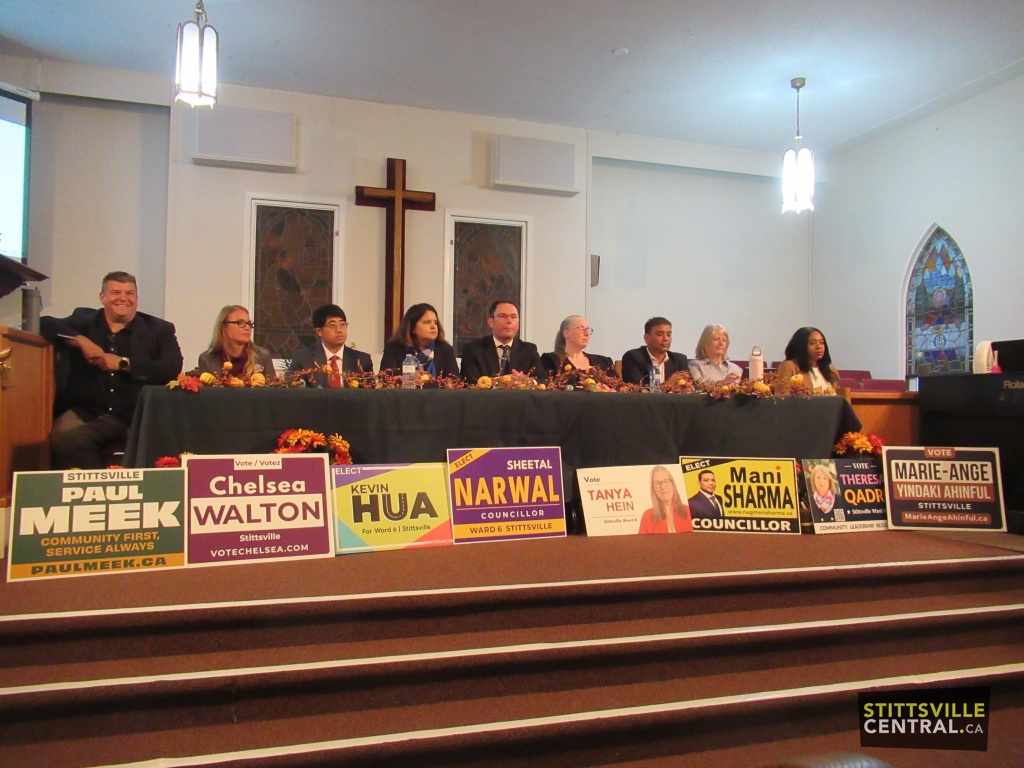







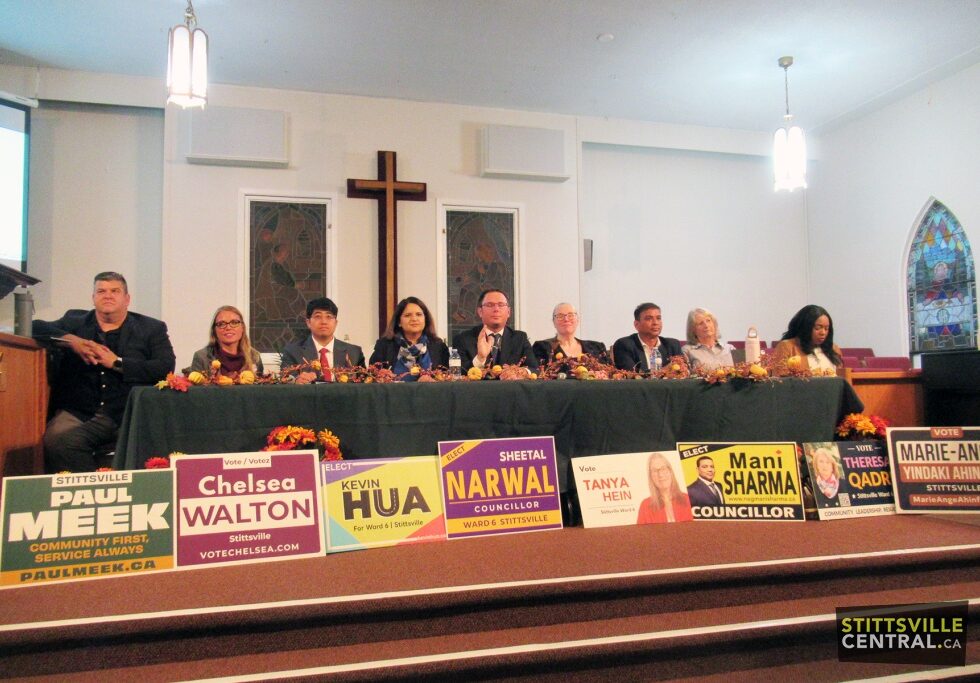
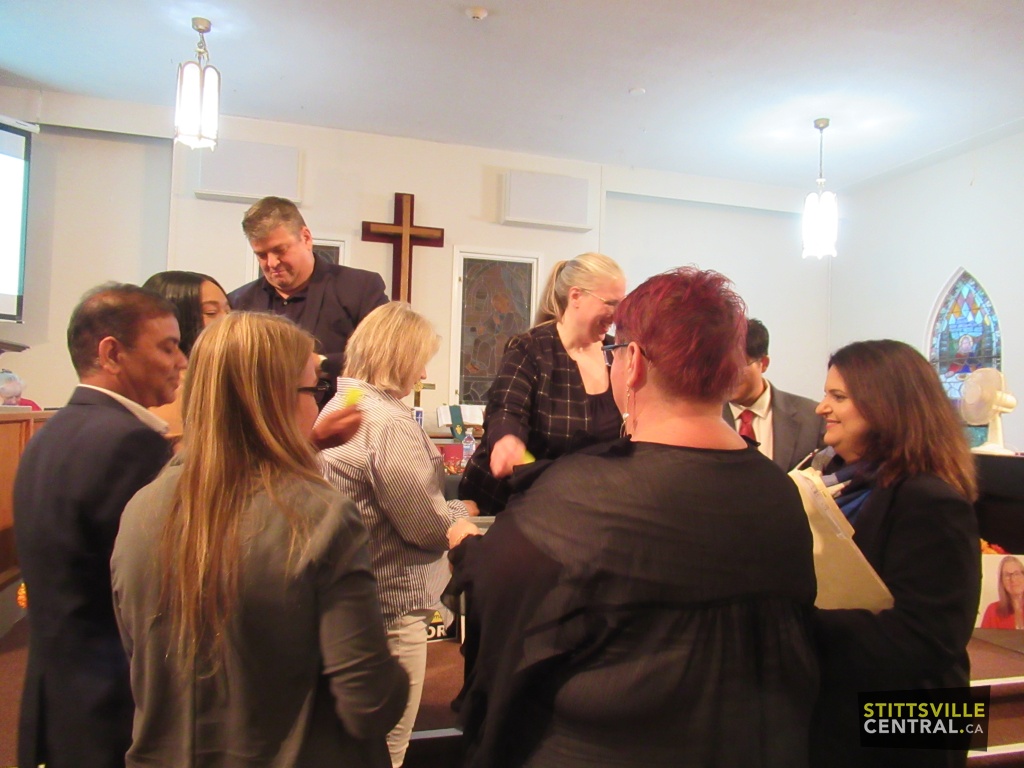
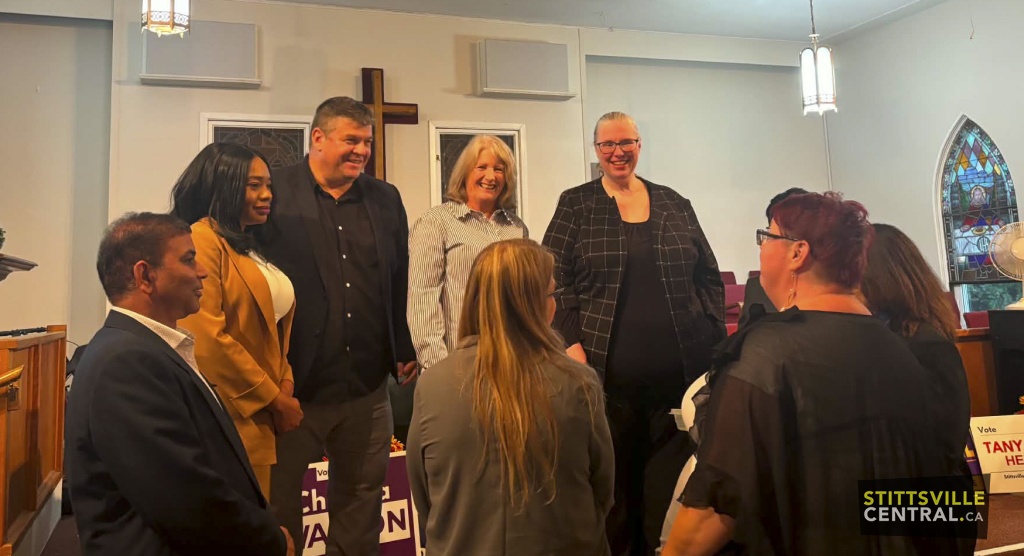
(On the evening of September 17, 2026, the Stittsville Village Association hosted an all-candidates debate for those running in Ward 6 – Stittsville. L to R: Paul Meek, Chelsea Walton, Kevin Hua, Sheetal Narwal, Devin O’Brien, Tanya Hein, Mani Sharma, Theresa Qadri, and Marie-Ange Yindaki Ahinful. Photos: Stittsville Central)
Transportation and the infrastructure needed to support Stittsville’s rapid growth dominated Thursday evening’s Ward 6 all-candidates debate. Although the nine candidates largely agreed that services have not kept pace with development, they differed over whether Carp Road or Robert Grant Avenue should receive immediate priority and offered competing approaches to transit, consultation and accountability.
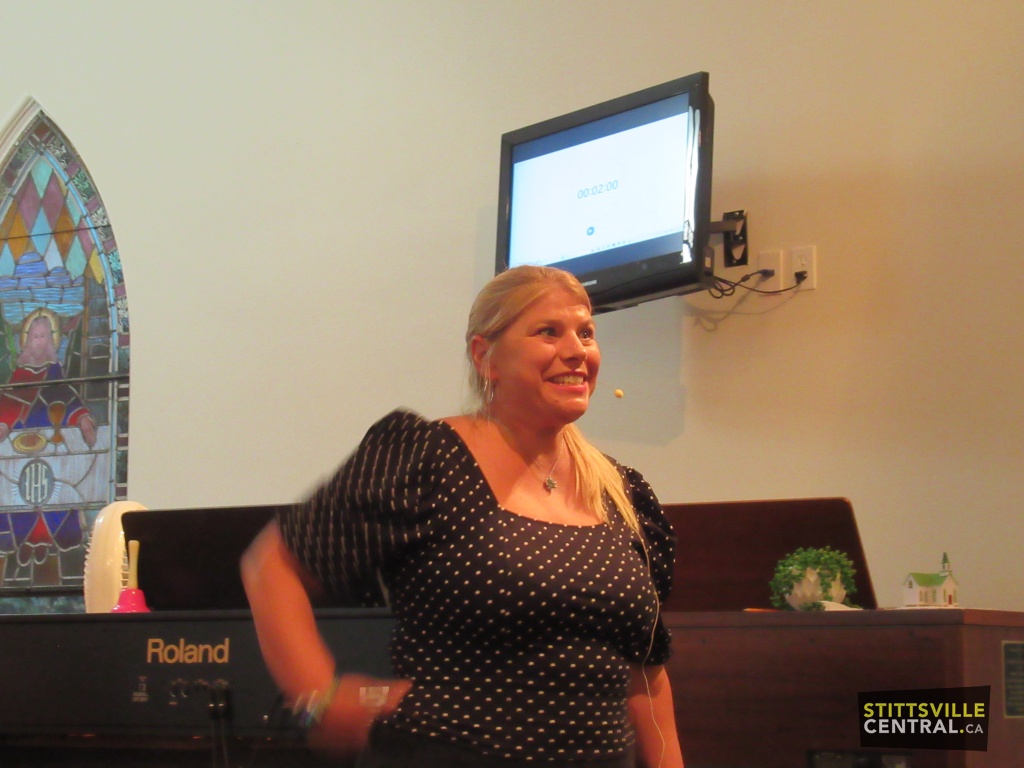
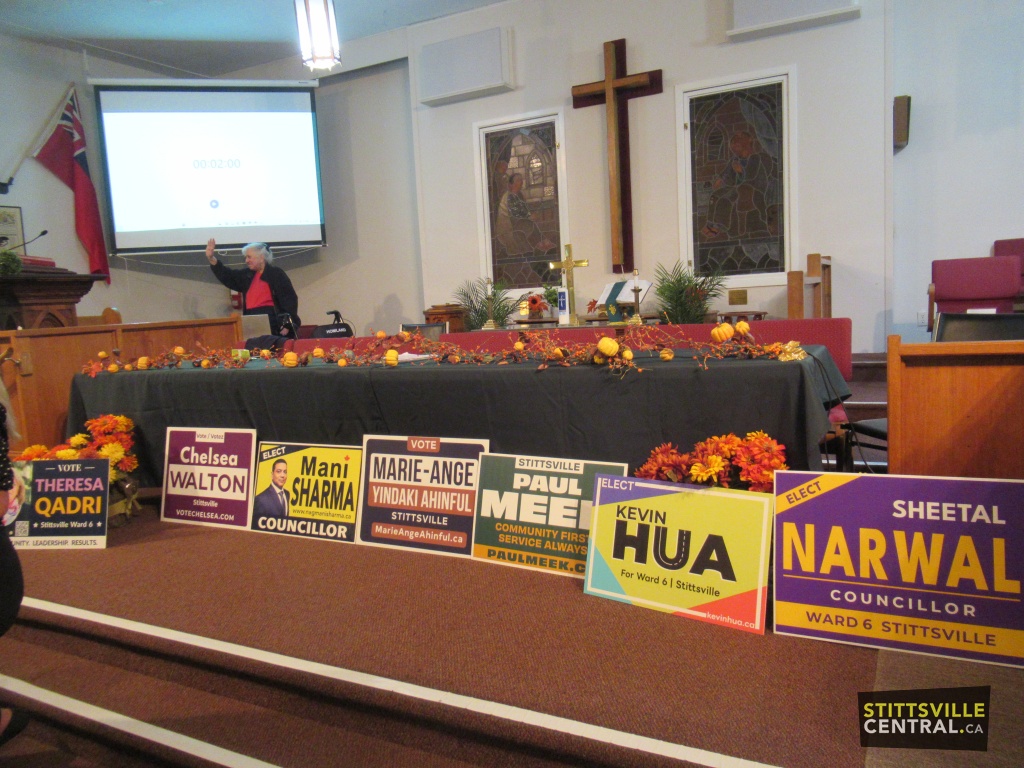
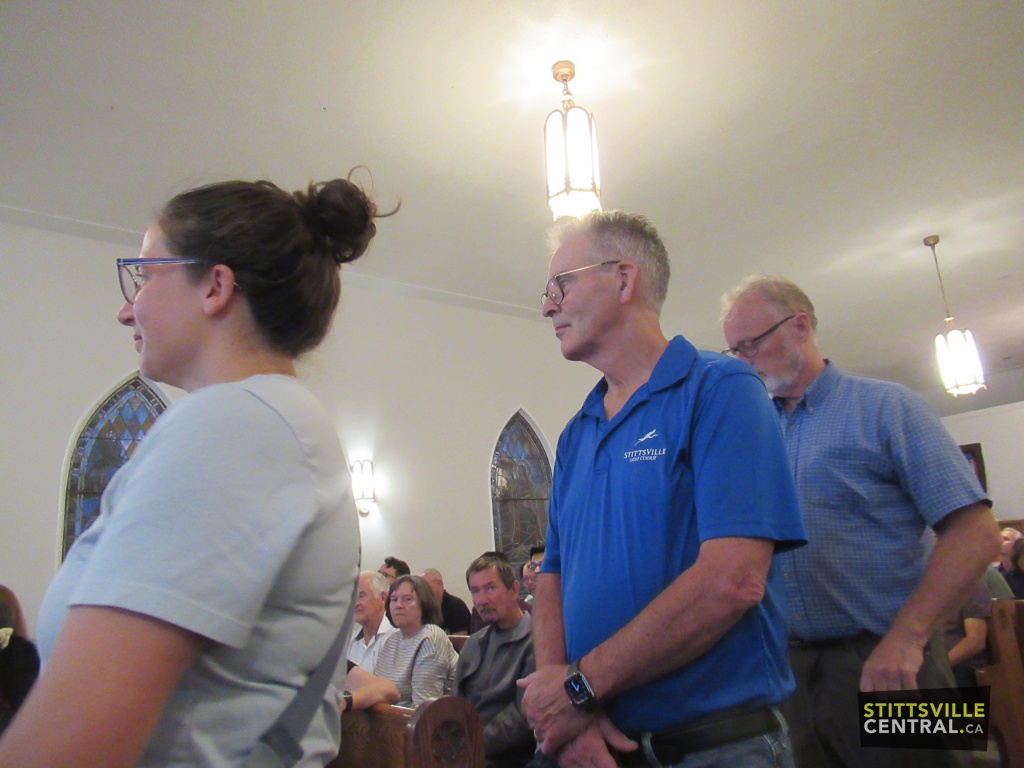
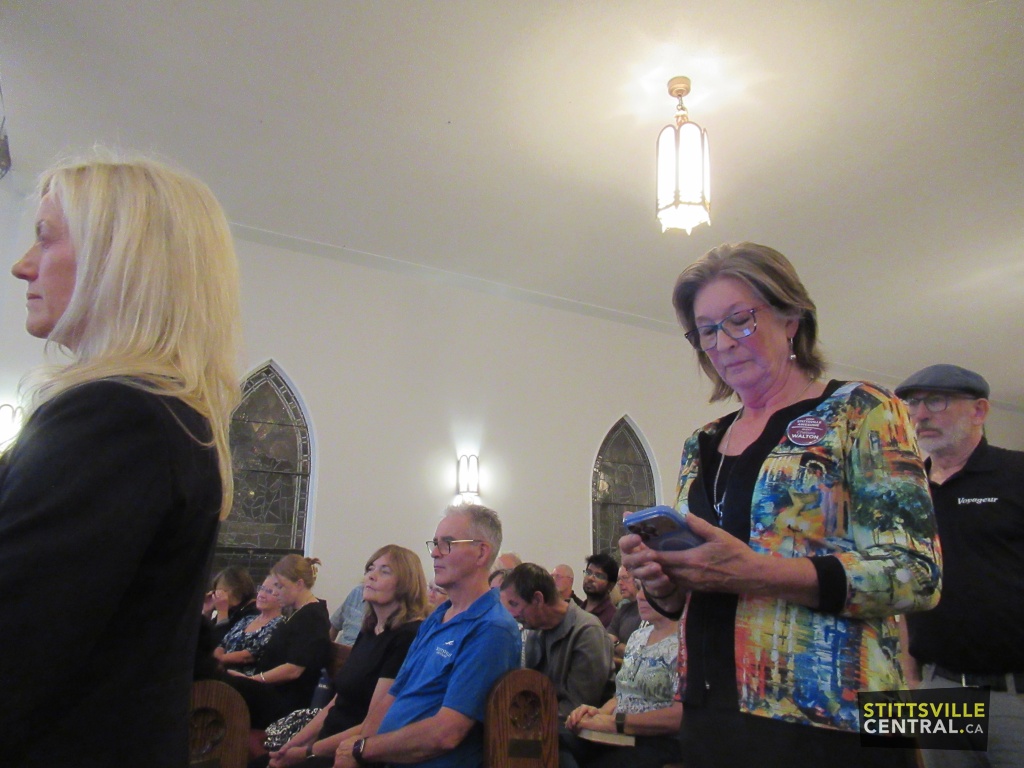
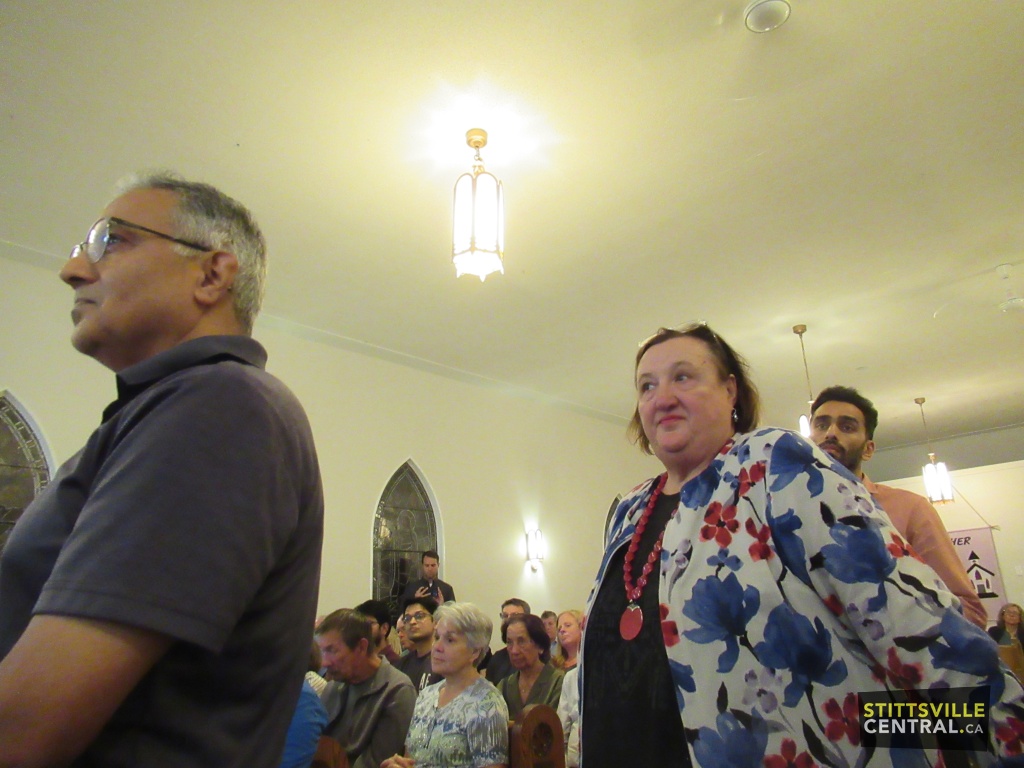
The Stittsville Village Association held the debate on September 17 at Stittsville United Church, with SVA President Deanna Paolucci serving as moderator. Audience members questioned selected candidates on responsible development, transportation, wetlands, recreation and what residents could expect during the next councillor’s first months in office.
Responsible growth
The SVA opened with the evening’s central topic: what responsible development means and what candidates would do to protect Stittsville’s identity and livability.
Candidates generally agreed that responsible growth should be measured by more than the number of homes constructed. Their answers repeatedly returned to whether new development would preserve Stittsville’s character while providing the roads, transit and community services needed by a growing population.
“We have a tight-knit community where people are proud to call home,” Chelsea Walton said.
Tanya Hein similarly emphasized livability and the quality of new development. “It needs to be livable,” she said. “We need to make sure that we are building quality, not just numbers.”
Kevin Hua proposed a community benefits framework that he said would give the City greater power to require developers to provide amenities and services in new neighbourhoods. “I think the city needs stronger teeth to actually be able to ensure that developers pay their fair share in the neighbourhoods that they’re building,” he said.
Taken together, the candidates’ answers suggested that responsible growth is not simply about how many homes are built, but whether roads, transit, parks and other community services are provided quickly enough to support people moving into new neighbourhoods.
Carp Road or Robert Grant Avenue?
One of the evening’s clearest divisions concerned the sequencing of the Carp Road widening and the Robert Grant Avenue extension. Candidates agreed that both projects matter but differed over whether the City should complete the long-delayed Carp Road project first or prioritize another connection to Highway 417.
Chelsea Walton and Devin O’Brien took similar positions, arguing that Carp Road should be the immediate priority.
Walton supported widening Carp Road and said she would bring together infrastructure staff, legal staff and the City’s real estate group to determine the project’s status, the remaining barriers, whether property acquisitions are complete and why construction has not begun. She also promised to explain publicly what residents and businesses should expect next.
O’Brien made Carp Road his top priority, saying the project has been delayed because the City has not maintained adequate relationships with affected property owners.
Paul Meek, Sheetal Narwal and Theresa Qadri placed greater emphasis on the Robert Grant Avenue extension. Meek argued that Carp Road should be deprioritized until Robert Grant is extended northward and connected to Highway 417. In his view, widening Carp Road without providing another route would create additional disruption without addressing the underlying access problem.
Narwal largely agreed that Robert Grant should receive priority but added an important qualification: if Carp Road funding cannot legally be reassigned, the City should proceed with the funded project. She characterized the remaining Carp Road issue as a property-acquisition issue rather than a funding issue and proposed advocating for Robert Grant as the next major project.
Qadri also identified Robert Grant as her preferred priority, citing population growth and the road’s anticipated role in supporting future development.
Transit priorities
Transit produced some of the evening’s strongest agreement, although candidates proposed different short- and long-term solutions.
Hua made transit his top priority and proposed a Stittsville bus station or transit hub to improve local routes, strengthen connections to neighbouring communities, increase reliability and provide a more direct route to downtown.
Hein also named transit as her top priority. She connected it to housing affordability, higher-density development, buildings with little or no parking, youth and seniors, and the ability to live without owning a car.
Narwal proposed requesting a route-level transit reliability report specifically for Ward 6 rather than relying on citywide data.
She initially described it as part of her early agenda but acknowledged that it might take approximately 200 days rather than 100.
Mani Sharma proposed additional buses, local shuttle services connecting community hubs, working toward an LRT connection near Palladium and serving on the Transit Commission.
Walton connected unreliable transit to the problems created by denser housing and reduced parking requirements. She supported a range of housing types but argued that the infrastructure around those homes must work.
The proposals reflected two different timelines for improving transit. Some candidates focused on immediate measures such as route reliability, additional buses and local connections, while others emphasized longer-term projects such as a transit hub or eventual LRT service.
Candidates also identified infrastructure priorities beyond major roads and transit. Meek pointed to traffic calming and neighbourhood street safety as areas where the City could produce relatively quick results, while Hua identified the proposed primary care health hub as a project he would advocate to complete.
Consultation and transparency
“Communication and representation of the people is so important,” Marie-Ange Yindaki Ahinful said. She argued that public consultation should occur before, during and after a project rather than being treated as a single meeting or opportunity for feedback.
Walton said consultation often occurs after plans are already substantially formed. She proposed consulting residents earlier, explaining which decisions residents can influence, identifying what is already decided or outside the project’s scope, and showing how public feedback changed the final plan.
Narwal proposed publishing plain-language reports explaining what the City heard, what changed because of public input and what could not be changed. She also said residents should be consulted again when a major project has been delayed for five years.
Sharma promised to hold monthly town halls, provide updates on resolved and unresolved issues, and respond to residents within 24 to 48 hours.
Qadri proposed an online dashboard showing applications and projects underway in Stittsville. She also said consultation meetings should include relevant City staff and planning officials.
The First 100 Days
The candidates who addressed their early priorities offered a mixture of immediate administrative work, public reporting, project advocacy and relationship-building.
Walton said she would obtain detailed status reports on major transportation projects, identify barriers and milestones, and report her findings publicly. Narwal proposed seeking a Ward 6 transit-reliability report and contacting property owners affected by the Carp Road project, although she acknowledged that the transit report might take closer to 200 days. O’Brien said he would make Carp Road his first priority, seek support from other councillors and rebuild relationships with affected property owners.
Qadri proposed establishing a public project dashboard and said she would ensure Carp Road was completed and the Stittsville Main Street connections were finished. Yindaki Ahinful said she would meet with residents, businesses and community organizations, review major transportation, housing and infrastructure projects, establish the councillor’s office and begin building relationships across governments.
Protecting the Goulbourn Wetland Complex
There was little disagreement among the candidates who answered the wetlands question, with each expressing support for protecting the Goulbourn Wetland Complex.
The Goulbourn Wetland Complex west of Stittsville is a network of swamps, marshes and fens containing the headwaters of Poole and Flowing creeks and habitat for species at risk, including Blanding’s turtles and snapping turtles. Ontario Nature reports that since provincial wetland-evaluation rules changed in 2023, 130 hectares within the complex have lost their provincially significant wetland designation. The affected wetlands were not automatically destroyed, but they no longer receive the same level of provincial protection. One proposal affecting the area is the Stittsville Quarry II expansion on Jinkinson Road. City Council approved the required planning amendments, but the provincial aggregate licence application remains under consideration. Publicly available information does not provide a reliable figure for how much wetland habitat would ultimately be eliminated.
Recreation needs
While candidates agreed that Stittsville eventually needs additional recreation space, most acknowledged that a new facility would take years to plan and build. Their immediate proposals focused on using existing facilities better.
Meek suggested making better use of existing recreational facilities before undertaking expensive new projects. “The infrastructure’s there, the parks are there, the spaces are there,” he said, arguing that the City could create more programming without “spending a ton of money.”
Other suggestions included expanding programming at the CARDELREC Recreation Complex, creating more options for youth aged 11 to 15, partnering with school boards or private recreation organizations, and beginning plans for another recreation facility.
By the end of the evening, the debate had produced more agreement about Stittsville’s challenges than disagreement about its future. Candidates broadly called for infrastructure that keeps pace with development, more reliable transit, earlier public consultation and stronger protection for natural areas. The clearest differences concerned which transportation projects should come first, what could realistically be accomplished in the short term and how candidates would hold the City accountable for results.
For Ward 6 voters, the choice may ultimately come down to which candidate offers the clearest priorities, the most credible timelines and the strongest plan for turning broad agreement into measurable action.