








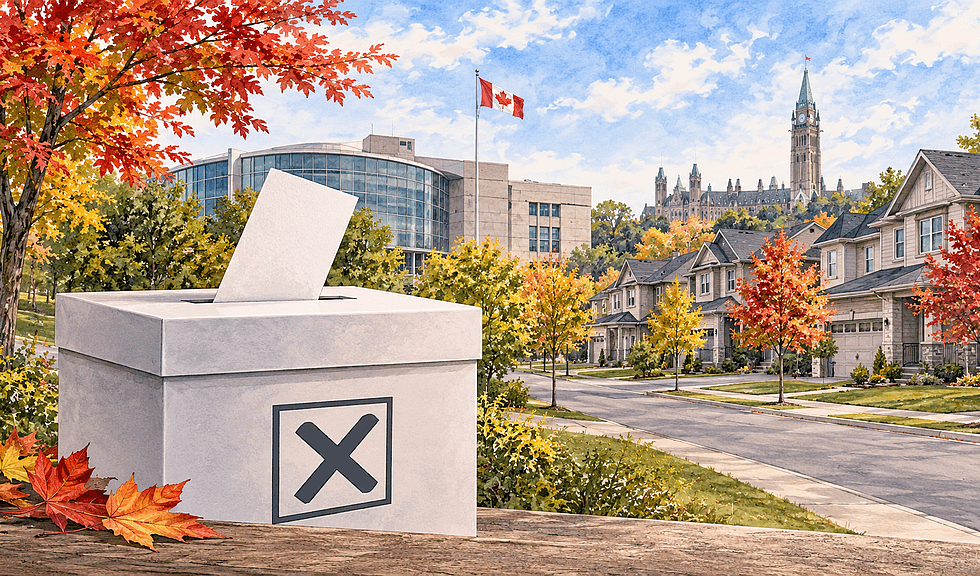
(Chelsea Walton wins Ward 6 as Ottawa voters return Mark Sutcliffe to the mayor’s office. Housing, transportation, affordability and the demands of a growing city will shape the next four years.)
Ottawa voters have made their choices, and the results of the October 26, 2026 Municipal Election have set the direction for the city’s next four years. For residents of Stittsville, the election brought a change in representation at City Hall, with Chelsea Walton elected to replace outgoing Councillor Glen Gower in Ward 6. The Stittsville race is particularly interesting because incumbent Glen Gower announced he would not seek a third term. Nine candidates competed for the open seat.
Citywide, incumbent Mayor Mark Sutcliffe secured a second term, while voters chose representatives across Ottawa’s 24 wards. But beneath the election results lies a bigger question: how will the new council respond to the challenges facing a growing city and the neighbourhoods within it?
For Stittsville, those challenges are particularly visible. New homes and subdivisions continue to change the community, while residents raise questions about roads, traffic, public transit, recreation, natural areas and whether municipal services are keeping pace with development.
The election may be over, but the work of addressing those concerns is just beginning.
A new voice for Stittsville
Chelsea Walton has been elected Ward 6 councillor, receiving 6,847 votes, or 43.72 per cent of the ballots cast in the ward.
The race attracted nine candidates after Glen Gower announced in February that he would not seek a third term. Gower had represented Stittsville since 2018 and was re-elected in 2022.
Walton’s victory came in a competitive field that included Theresa Qadri, who received 2,332 votes (14.89 per cent), Kevin Hua with 2,153 (13.75 per cent), Paul Meek with 1,538 (9.82 per cent), and Sheetal Narwal with 1,203 (7.68 per cent).
The remaining candidates were Tanya Hein, Mani Sharma, Marie-Ange Yindaki Ahinful and Devin Michael Fitzgerald O’Brien.
The result gives Stittsville a new representative at a time when decisions about transportation, development and infrastructure will have a direct effect on residents’ daily lives.
Walton’s campaign included a commitment to examine the status of major transportation projects, identify the barriers delaying them and communicate publicly about what residents and businesses can expect.
At the September 17 all-candidates debate hosted by the Stittsville Village Association, Walton identified the long-discussed Carp Road widening as an immediate priority. She proposed bringing together City infrastructure, legal and real estate staff to establish the project’s status, including outstanding property acquisitions and the reasons construction has not moved forward.
Her election now puts those commitments in the context of the practical responsibilities of a councillor: advocating for the ward, working with municipal departments, participating in council decisions and keeping residents informed.
The issues that shaped the Ward 6 campaign
The local campaign also had a clear set of issues. The Stittsville Village Association debate offered a useful snapshot of the issues candidates heard from residents.
- Carp Road widening versus the Robert Grant Avenue extension.
- Better and more reliable public transit.
- Development and the need for infrastructure to keep pace with population growth.
- Protection of the Goulbourn Wetland Complex.
- Recreation facilities and programming.
- Public consultation and accountability at City Hall.
Transportation and infrastructure dominated the discussion. Candidates broadly agreed that development has placed pressure on existing services, but they did not agree on which major road project should come first. The debate highlighted differing views about Carp Road and the proposed Robert Grant Avenue extension.
Walton and Devin O’Brien argued that Carp Road should receive immediate attention. Paul Meek, Sheetal Narwal and Theresa Qadri placed greater emphasis on the Robert Grant Avenue extension and its potential connection to Highway 417.
The distinction matters to residents who regularly experience congestion and have watched transportation projects become long-running community concerns.
Both projects will require funding, coordination and decisions involving municipal departments and, in some cases, other levels of government. The new councillor will need to explain what can be advanced, what remains delayed and what residents can realistically expect.
Transit was another major subject. Candidates discussed everything from additional buses and local shuttle services to improved route reliability, a Stittsville transit hub and longer-term connections to the city’s broader rapid-transit network.
Kevin Hua proposed a transit station or hub serving Stittsville, while Tanya Hein emphasized reliable transit as an important part of affordability and accessibility. Narwal suggested a ward-specific transit reliability report, and Mani Sharma discussed additional buses and local connections.
These proposals reflect a concern shared by many residents: public transit needs to be a practical option for more people, not simply an alternative that works only under ideal circumstances.
For students, seniors, commuters and residents who do not drive, reliable service can make a significant difference to daily life.
Growth, development and community character
Stittsville’s growth is another issue that will remain firmly on the municipal agenda. New residential development brings opportunities for families and businesses, but it also creates demands for roads, parks, schools, recreation facilities, transit and other services.
At the candidates’ debate, there was broad agreement that responsible development must involve more than simply building additional homes.
Candidates spoke about preserving the community’s character while ensuring that the infrastructure and amenities needed by residents are available.
Walton emphasized the importance of ensuring that infrastructure works alongside denser housing. Hua proposed a community benefits framework that would give the City stronger tools to secure contributions from developers for neighbourhood amenities.
For residents, the central question is straightforward: when new homes are built, how quickly will the roads, parks, transit and services needed to support those homes follow?
The new council will have to balance housing needs with infrastructure capacity, planning policies, municipal budgets and the expectations of established neighbourhoods.
Protecting Stittsville’s natural areas
Growth also raises questions about the protection of the natural environment. The Goulbourn Wetland Complex, west of Stittsville, was raised during the candidates’ debate.
The Complex includes a network of swamps, marshes and fens, as well as the headwaters of Poole and Flowing creeks. It provides habitat for wildlife, including species at risk.
The debate included discussion of changing wetland protections and the proposed Stittsville Quarry II expansion on Jinkinson Road.
Candidates who addressed the wetlands question expressed support for protecting the Complex.
The challenge for the incoming councillor will be to understand the planning and regulatory processes affecting these areas, communicate clearly with residents and advocate for environmental considerations in decisions involving development.
What happened across Ottawa?
At the citywide level, Mark Sutcliffe won re-election as mayor with 139,354 votes, representing 44.65 per cent of the vote.
Ottawa-wide results:
- 36.21% – Citywide voter turnout
- 314,393 – Ballots cast
- 44.65% – Mark Sutcliffe’s vote share
- 24 – City council wards
- Source: City of Ottawa election results.
Jeff Leiper finished second with 105,819 votes (33.90 per cent), followed by Neil Saravanamuttoo with 34,463 (11.04 per cent) and Alex Lawson with 23,605 (7.56 per cent).
The other ten mayoral candidates shared the remaining votes.
Sutcliffe’s re-election means continuity in the mayor’s office, but the composition of council and the priorities of individual wards will influence how the next term unfolds.
Among the mayor’s stated priorities are affordability, public transit, housing and public safety.
Following the election, Sutcliffe identified improving transit and addressing affordability as key priorities. His campaign commitments included a proposed $95 monthly transit pass, limiting property tax increases to between two and 2.25 per cent for the first two years, and expanding supportive housing.
He also pledged to pursue additional phases of light rail transit, increase staffing in policing, firefighting and paramedic services, and address homelessness.
These are commitments that will require detailed budget decisions and support from council. Their implementation will be an important measure of the new administration’s progress.
Voter turnout raises questions
One of the more notable figures from the election was voter participation. Ottawa recorded turnout of 36.21 per cent, with 314,393 ballots cast among 868,248 eligible electors.
In Ward 6, turnout was higher, at 39.27 per cent. A total of 15,741 ballots were cast among 40,079 eligible electors.
Ward 6 – Stittsville – Councillor vote:
- 39.27% – Ward voter turnout
- 15,741 – Ballots cast
- Eligible electors: 40,079
- Chelsea Walton – 6,847 votes – 43.72% – Elected Councillor
- Theresa Qadri – 2,332 votes – 14.89%
- Kevin Hua – 2,153 votes – 13.75%
- Paul Meek – 1,538 votes – 9.82%
- Sheetal Narwal – 1,203 votes – 7.68%
- Tanya Hein – 721 votes – 4.60%
- Mani Sharma – 380 votes – 2.43%
- Marie-Ange Yindaki Ahinful – 274 votes – 1.75%
- Devin Michael Fitzgerald O’Brien – 212 votes – 1.35%
- Source: City of Ottawa election results.
Ottawa-Carleton District School Board – Zone 1:
- Turn out per cent: 37.00%
- Ballots cast: 32,997
- Eligible electors: 89,184
- John MacRae – 12,544 votes – 61.78% – Elected
- Jon Flemming – 4,067 votes – 20.03%
- Alykhan Abdulla – 2,231 votes – 10.99%
- Imrana Waraich – 1,462 votes – 7.20%
Ottawa Catholic School Board – Zone 1:
- Scott Phelan – Acclaimed
Conseil des écoles catholiques du Centre-Est – Zone 5:
- Turn out per cent: 34.79%
- Ballots cast: 59,971
- Eligible electors: 172,392
- Joy Nehme – 1,498 votes – 56.08% – Elected
- André Djomamessi – 1,173 votes – 43.92%
Conseil des écoles publiques de l’Est de l’Ontario – Zone 12:
- Turn out per cent: 36.77%
- Ballots cast: 70,195
- Eligible electors: 190,913
- Samia Ouled Ali – 922 votes – 62.05% – Elected
- Nevalette Zayet – 564 votes – 37.95%
Although Stittsville’s participation exceeded the citywide figures, the numbers mean that most eligible voters in both the ward and the city did not cast a ballot.
The figures raise questions about how municipal government and school boards can better connect with residents and encourage greater participation in local decision-making.
Municipal government has a direct effect on many everyday concerns, from property taxes and garbage collection to road maintenance, recreation facilities, development applications and transit.
Keeping residents informed between elections will be an important part of building that connection.
The road ahead: A new council and a demanding agenda
The new term of Ottawa City Council begins November 15, 2026, and runs until November 14, 2030. Before taking office, newly elected members will participate in orientation sessions covering council procedures, municipal budgets, accountability, planning legislation and the responsibilities of elected officials.
For Stittsville residents, attention will quickly turn from campaign promises to measurable progress.
Will the Carp Road project advance? What will happen with the Robert Grant Avenue extension? Can transit service become more dependable? How will new development be matched with infrastructure and recreation? What steps will be taken to protect the Goulbourn Wetland Complex?
These questions will help define the new councillor’s term.
They will also require cooperation beyond Ward 6. Major transportation and infrastructure decisions depend on citywide priorities, budget allocations and relationships with provincial and federal governments.
Walton will have to make Stittsville’s concerns heard at the council table while working with colleagues who represent communities facing their own demands and financial pressures.
For residents, the election offers a new opportunity to engage with their representative, raise concerns and follow the decisions that affect their neighbourhoods.
The ballots have been counted and the results declared official. Now comes the more difficult part: turning campaign commitments into action and ensuring that Stittsville’s growth is matched by the services, infrastructure and quality of life residents expect.
The Ottawa Municipal Election took place on October 26, 2026. The City Clerk declared the results official on October 30, with the new council term beginning November 15, 2026.
