









(For Richmond father, Oreoluwa Okunlola (Ore), the answer to teaching children about money began with something children already know and enjoy: music, cartoons and games. Photos: provided/screen captures.)
Teaching children about money isn’t always easy. How do you explain budgeting to a five-year-old, let alone investing?
For Richmond father Oreoluwa Okunlola (Ore), the answer began with something children already know and enjoy: music, cartoons and games.
As a certified financial planner, Ore has seen how gaps in financial knowledge can affect people later in life. With two children of his own, ages three and six, he wanted to find a way to introduce financial concepts at a much younger age.
Ore moved to Canada 11 years ago and has called Richmond home since 2023. Drawing on his experience in financial services and his knowledge of the arts, he began developing what would eventually become Kids Love Investing (KLI).

But KLI didn’t start as an online learning platform. It began as a YouTube channel featuring animated music videos, followed by a children’s album that introduced saving through song. Comics came next, and over time, these different approaches came together to form an online platform designed to teach children about money.
“Understanding a concept yourself is one thing; explaining it to a five-year-old is another,” Ore explained.
With help from friends experienced in creating games and animated videos, Ore worked to simplify financial concepts without losing their meaning.
Today, KLI offers lessons, games and animated videos for children ages five to 13, divided into three learning levels: Beginner (ages five to seven), Intermediate (eight to 10) and Advanced (11 to 13).

The activities introduce saving, spending, budgeting and investing through scenarios tailored to different age groups. Younger children might explore saving for a toy, while older learners work through budgeting exercises that introduce unexpected expenses and financial choices.
After completing the Advanced level and its final questions, children can access Invest Quest, a simulated investment experience that uses play money to explore financial planning, asset allocation and diversification, including the possibility of investment losses.
While the platform introduces these concepts through digital activities, Ore believes parents also have an important role in bringing the lessons into everyday life.
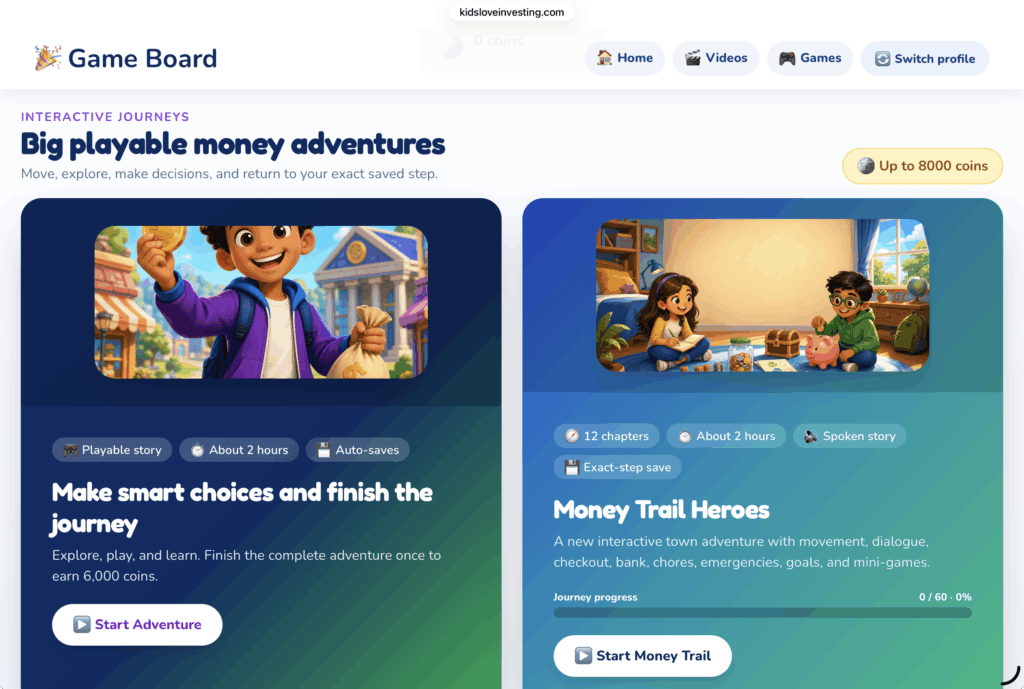
A trip to the grocery store, for example, can become an opportunity to talk about needs versus wants. And anyone who’s taken a child shopping knows those two things aren’t always the same.
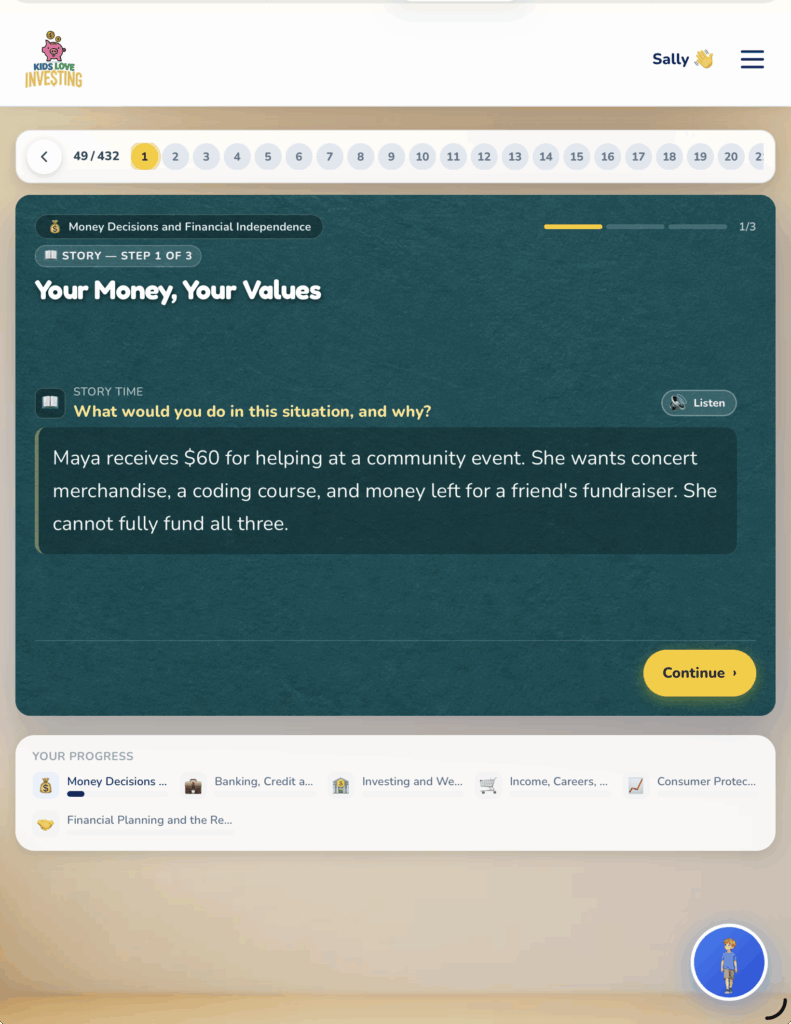
Parents can track their children’s progress through a dashboard and use the activities as starting points for conversations. Younger children may benefit from having someone read instructions or work through lessons alongside them.
Families can also put saving into practice by helping a child choose something they’d like to buy, such as a book or toy, then figuring out how much to set aside each week to reach that goal.
“The aim is to make money conversations a natural part of family life, without parents needing to be financial experts,” Ore explained.
So, what do families think of KLI so far?
According to Ore, early feedback has been encouraging. Some parents have reported that their children are beginning to understand budgeting, saving and the importance of making choices when money is limited.
“The Ben and Maya animated series has been a particular favourite among families who have shared feedback,” he added.
These observations, however, are preliminary rather than established learning outcomes. KLI uses quizzes and assessments to check understanding, and Ore hopes to examine those results alongside family feedback to identify areas for improvement.
Looking ahead, Ore hopes to add more lessons and animated videos, with longer-term plans to make Kids Love Investing available in multiple languages and reach families around the world.
Closer to home, he has contacted schools, libraries and community organizations to explore potential financial literacy programs for children. While these conversations are still in the early stages, he welcomes opportunities to collaborate with organizations in Richmond and surrounding communities.
What began as an effort to teach his own children about money has become a project Ore hopes will benefit families far beyond Richmond.
“Ultimately, I want children to understand money in ways that relate to their own lives: making choices, saving for something important and recognising that resources are limited.”
Families interested in exploring Kids Love Investing can visit kidsloveinvesting.com. The platform offers paid subscriptions and a seven-day free trial.