








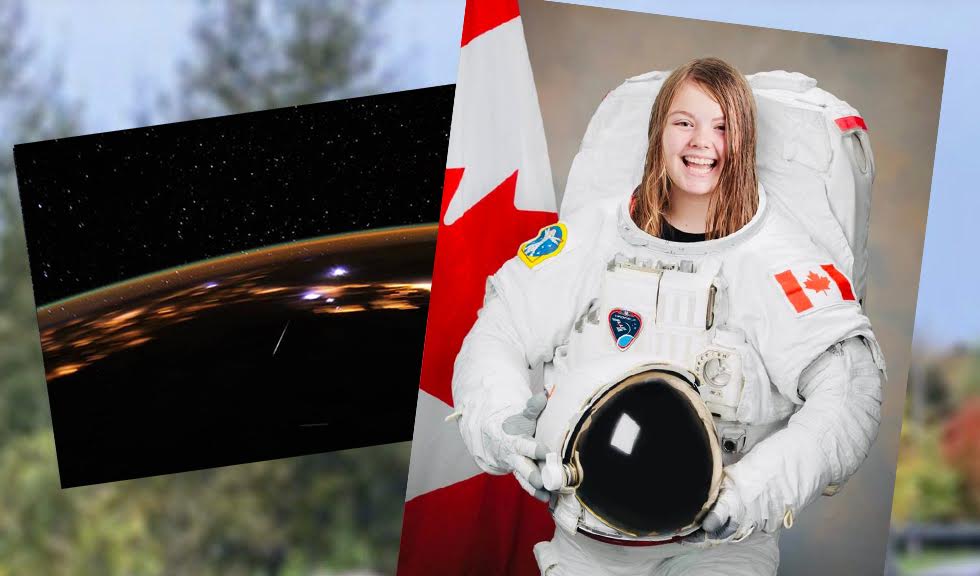
As we continue to make our way through summer, August is sure to provide astronomy lovers with plenty of exciting observation opportunities as usual. From the Sturgeon Moon to the “best” meteor shower of the year, here are some of August’s most anticipated astronomical phenomena and rocket launches.
Sometime this month, the SpaceX Crew-10 mission astronauts will be returning to Earth after already spending a little over four months on the International Space Station. This four-member crew is made up of Commander Anne McClain (an engineer and NASA astronaut who has logged almost a year of spaceflight time over her career), Pilot Nichole Ayers (a United States Air Force major and NASA astronaut), Mission Specialist Takuya Onishi (a Japanese astronaut and aquanaut who previously spent time on the ISS back in 2016), and Mission Specialist Kirill Peskov (a Russian cosmonaut who completed his first spaceflight on the Crew-10 mission).
The crew originally launched using a Falcon 9 rocket on March 14, 2025, and have remained on the ISS ever since, conducting scientific experiments examining the flammability of various materials for future spacecraft design purposes, the effects of microgravity on the human body, and much more.

The full moon of the month, commonly referred to as the Sturgeon Moon, will reach its peak illumination at 3:55 AM (Eastern Time) on August 9. Named for the sturgeon fish that become even more plentiful in the late summer months, some alternative names for this moon include the Black Cherries Moon, the Harvest Moon, the Mountain Shadows Moon, and the Ricing Moon.
This year, the peak of the Perseids meteor shower, considered by many to be the best of the annual showers, will fall over August 12 and August 13. On these dates, the Perseids shower is estimated to produce up to 100 visible meteors every hour, a rate that is only comparable to one other yearly shower (the Geminids shower, which usually peaks in early December). However, hopeful observers will still be able to catch scattered Perseid meteors on non-peak dates— this particular shower usually appears between mid-July and late August, and this year is no different, with a predicted duration of July 17 to August 23.
The Perseids shower is known for frequently producing “fireballs”, which are much larger than average meteors and leave bright, glowing trails in their wake. The object of origin for the Perseids meteor shower is comet 109P/Swift-Tuttle, which takes 133 years to complete one full orbit around the Sun and most recently passed through the inner solar system in 1992. Hopeful observers are usually most successful when seeking out Perseid meteors in the hours before dawn, although they can occasionally be spotted in the Northern Hemisphere as early as 10:00 PM. Good luck to anyone attempting to spot these blazing meteors!

Overall, though August’s schedule of astronomical events might not be quite as full as the previous few months, there will still be plenty of chances for fans of the night sky to experience them firsthand. Whether you choose to learn more about the results of the SpaceX Crew-10 mission or would rather try to see a glowing Perseid meteor, August is sure to be a great month for astronomy lovers worldwide.