









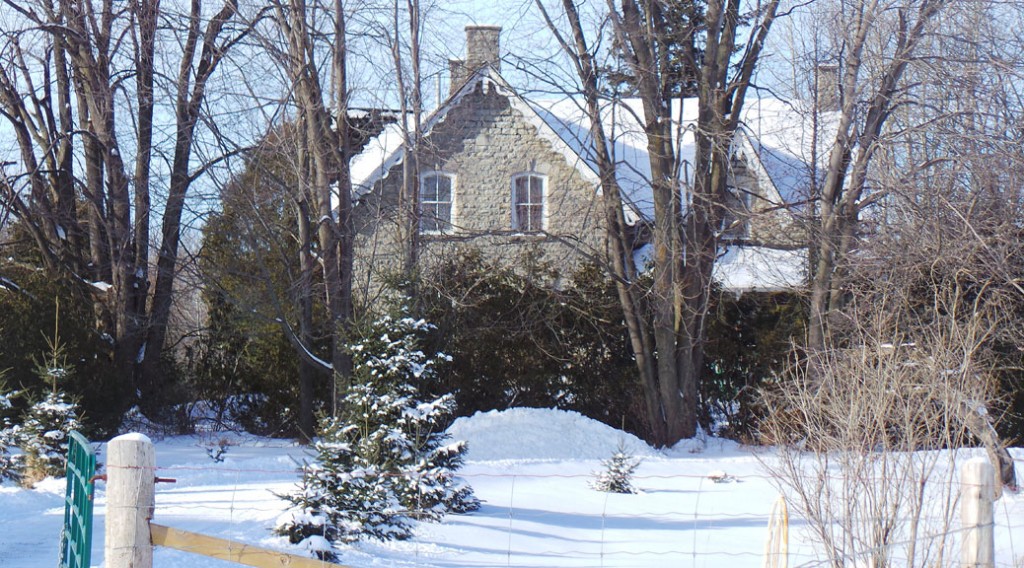
(Sadly the inside of the Fernbank Road home is gutted and the windows now boarded, but for now, the four strong stone walls still stand to remind us of the Flewellyn family and their long connection to our community. Photo: Stittsville Central)
On August 28, 2025, the report for the Demolition of 5897 Fernbank Road, the Flewellyn/Jones home, designated under Part IV of the Ontario Heritage Act (File Number: ACS2025-PDB-RHU-0055) was submitted to the Built Heritage Committee for their September 9, 2025 meeting. The report was submitted by Court Curry, Manager, Right of Way, Heritage, and Urban Design Services, Planning, Development and Building Services. The report recommended that the Built Heritage Committee recommend that Council approve the application to demolish the house located at 5897 Fernbank Road.
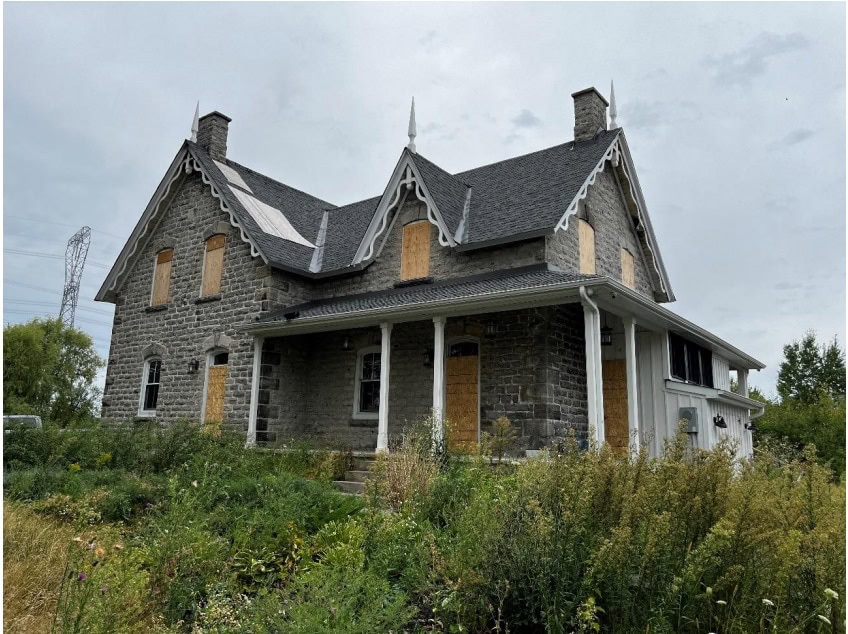
At the time of the fire, when asked about the cause of the fire, Nick DeFazio, public relations officer with Ottawa Fire, shared “the cause is undetermined after investigation, electrical – maybe. The loss is projected at $600,000.”
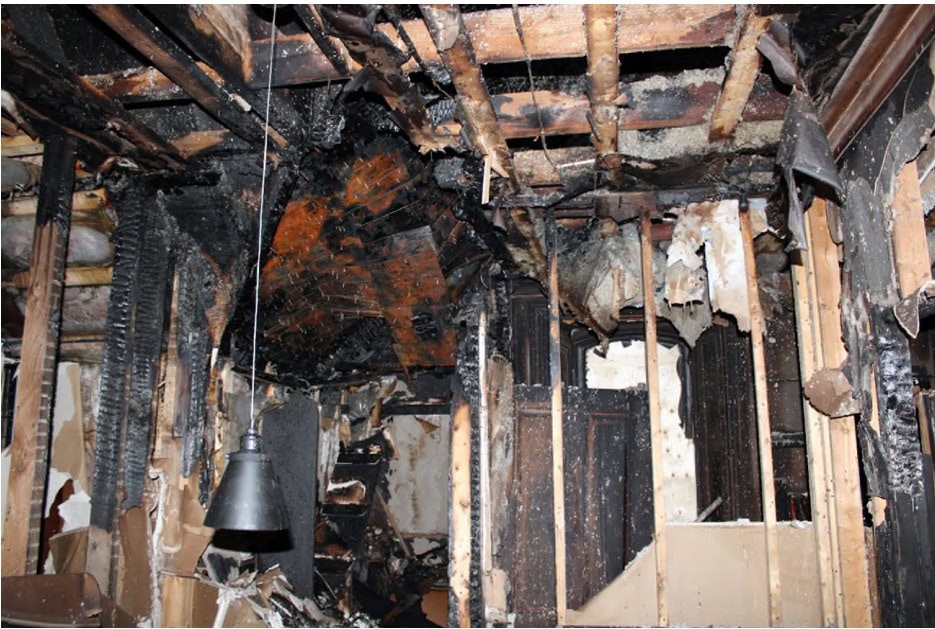
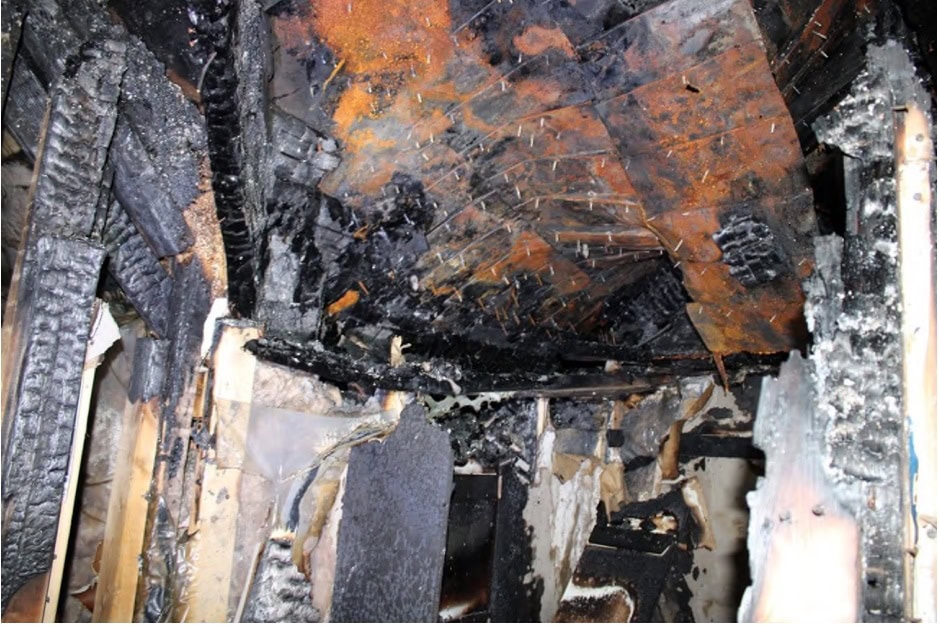
Due to the devastating March 26th fire, Pario Engineering & Environmental Sciences LP were asked by the City to “provide an opinion regarding the condition of the structure following the recently reported fire event and to provide repair recommendations to reinstate the building to its pre-loss condition”. On April 14, 2025, Pario were on-site to make their assessment of the fire damage the home received.
Pario’s Conclusions & Recommendations:
The stone & mortar foundation displayed signs of mortar degradation and damaged areas throughout. As noted above, the exterior stone & mortar foundation and exterior stone cladding appeared to have been repointed at some time. The repointing appeared to be of a modern cement-based mortar.
Historically, traditional masonry/stone walls were constructed with the use of lime mortar, which is a porous and permeable material.
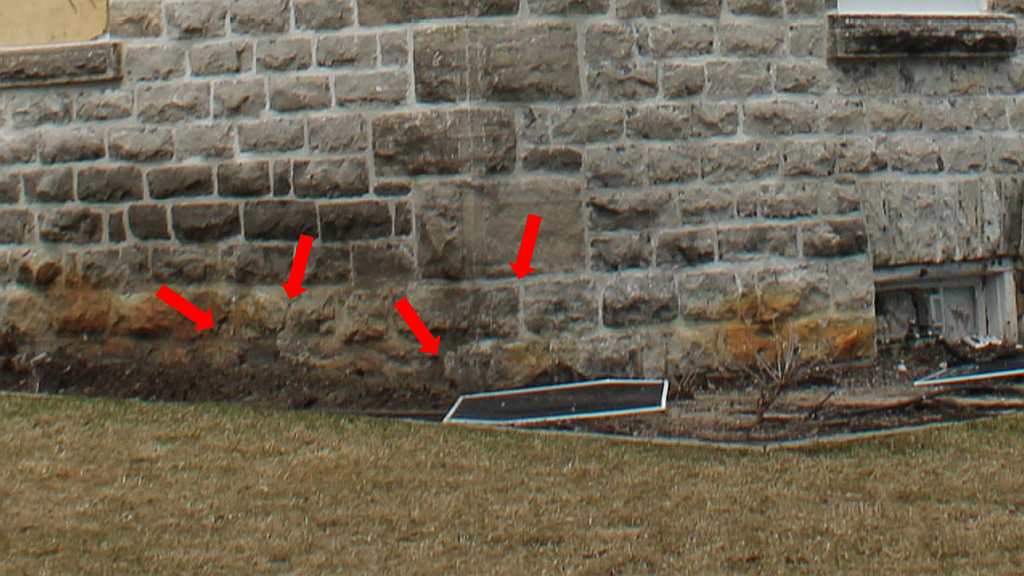
This design allowed moisture to pass through the wall via the lime mortar between the courses of stone or masonry (osmosis) and evaporate from the wall’s surface. Cement mortar, conversely, is a non-permeable material which prevents this natural ‘wicking’ of moisture from within the stone/masonry wall.
With cement mortar in place, it would be expected that moisture would build up within the wall over a period of time. This buildup of moisture would then be expelled through the next-most relatively permeable material – the masonry. Over extended periods of time this will prematurely degrade the material composition of the masonry. Further to this, freeze/thaw cycles during the winter months will cause expansion of the moisture within masonry units and cause visible spalling.
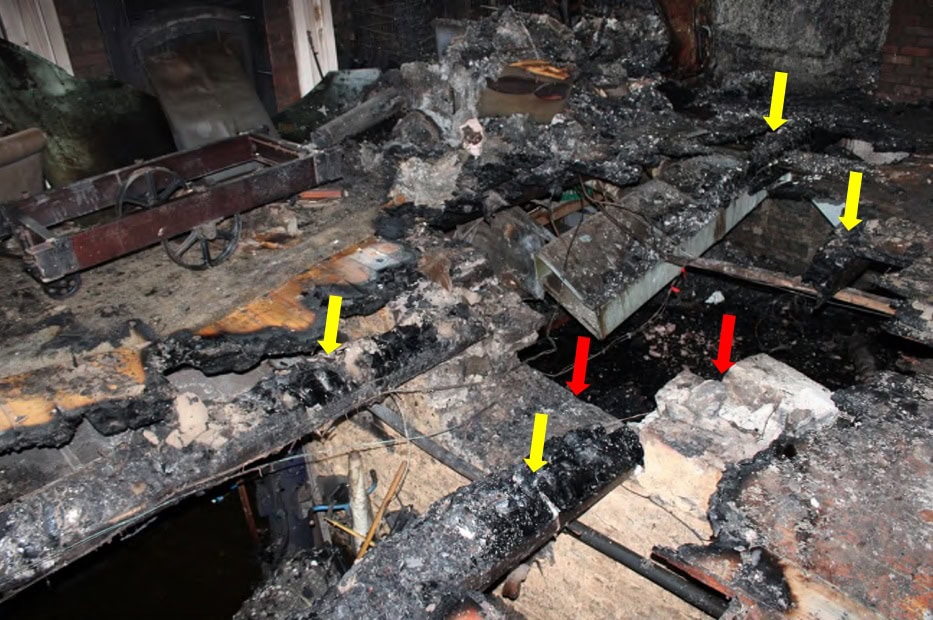
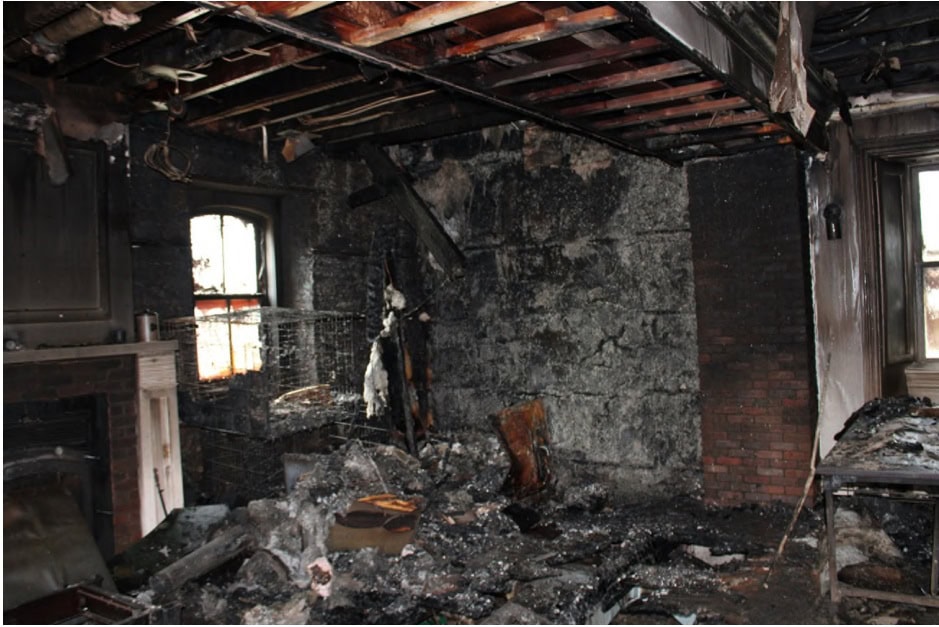
Furthermore, with the extent of observed rough-cut floor beam, second-floor exterior and interior wall, and roof fire damage, combined with the extensive heat/smoke/soot damages, Pario recommends the complete demolition of the structure, including the foundation.
The structure is deemed to be unsafe due to the floor and roof damage and should remain unoccupied.
Statement of Cultural Heritage Value or Interest (from the August 28 report):
The Flewellyn/Jones House has cultural heritage value for its contextual value as an important reminder of the historic agricultural character of Goulbourn Township, design value as a 19th century farmhouse and historical value for its association with the Flewellyn family and the early settlement of Goulbourn Township.
The Flewellyn/Jones House has design value as a good example of a Gothic Revival farmhouse built in the late 19th century to replace the earlier log house built when the land was first settled. Typical of this style, it features decorative bargeboard trim, a steeply pitched gable roof, segmental arched windows and a veranda with wooden trim.
The Flewellyn/Jones House is one of several houses in this area constructed with a similar plan. It features the same decorative bargeboard and layout as the Boyd House at 173 Huntmar Drive which was constructed one year later and may have been built by the same stone mason.
The Flewellyn/Jones House has historical value for its association with the Flewellyn family, a prominent family in early Goulbourn Township who owned the house from the time of construction until the 1950s. The Flewellyn family came immigrated to Canada from Ireland in 1863 and this property is associated with the settlement and farming of this area by Irish and Scottish immigrants in the mid-19th century.
Councillor Gower provided comments in the August 28 report to the Built Heritage Committee:
I’m saddened by the potential loss of Flewellyn-Jones House, which has been a landmark in Goulbourn and Stittsville for nearly 140 years.
Richard and Margaret Flewellyn arrived from Ireland with their young son John in the early 1860s. They purchased 195 acres in December 1869 at Concession X, Lot 26, Goulbourn Township, now known as 5897 Fernbank Road in Stittsville, where they raised 10 children – five girls and five boys. The stone house was built in 1886.
The family and their descendants became community leaders, involved in the founding of what’s now Stittsville United Church, and active in the local school board as trustees. They were probably involved in establishing SS #14, a pioneer schoolhouse on the other side of Fernbank that was demolished more than a decade ago.
The property changed hands several times in the mid-20th century before being purchased by Dorothy and Bill Jones in 1962.
The house is one of several stone buildings in the Stittsville/Goulbourn area that were built in late 19th century in the years following the Great Fire of 1870, that I call “The Stone Cousins”. Flewellyn-Jones is a Gothic Revival farmhouse, similar in style and construction to Boyd House and Patrick Hartin House, both located almost directly north near Huntmar and Maple Grove.
I encourage the current owners to work with City staff to appropriately commemorate the Flewellyn-Jones house and the legacy of the Flewellyn family in any future building or development on the property.
The Built Heritage Committee recommended at their September 9, 2025 meeting that Council approve the application to demolish the house located at 5897 Fernbank Road. The file goes to Council on Council September 24, 2025. The statutory 90-day timeline for consideration of this application under the Ontario Heritage Act will expire on November 16, 2025. While the Built Heritage Committee has a key advisory and recommending role, the final decision-making authority for these matters rests with City Council.
What a shame, those walls certainly look strongly built. Very sad,