








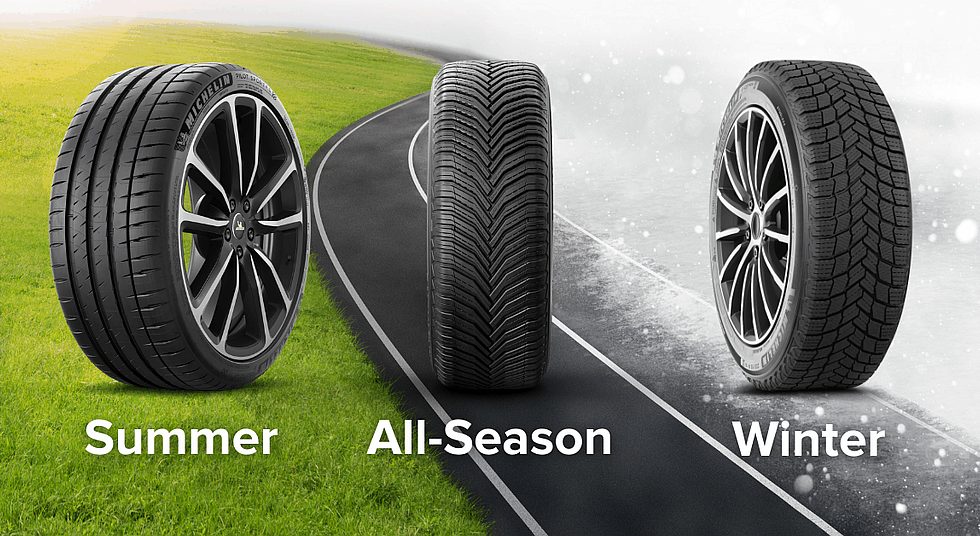
(Winter is here and it is time to install those winter tires. The above diagram outlines the different treads that keep you safe according to the season. Photo: Michelin Tires)
Driving in Stittsville just got a little bit harder with recent snowfalls. Winter tires are a necessity for the safety of everyone on the roads both because of this new fallen snow and the recent temperatures.
Winter tires are meant to be installed once temperatures dip below 7℃. Their performance is significantly better than summer, or all-season tires, once these temperatures hit. The two big factors contributing to the difference between summer, winter and all-season tires is the tread pattern and rubber compound. Each tire is designed and manufactured to perform well under its designated weather conditions.
In Ottawa we have had our fair share of scorching hot summers and freezing cold winters. Although all-season tires are made to be worn year round, an investment of two sets of tires might have to be made. All-season tires are a combination of summer and winter tires, meaning that some sacrifices have to be made. With such hot summers and cold winters, the sacrifices in traction and performance might not be worth saving your money.
Summer tires are designed to handle those dry and hot summer days. They have a wider tread with less grooving and a shallower tread depth to maximize contact on dry road conditions. When you mix rubber and heat, you may think the rubber will become more malleable. This is not the case for summer tires. The rubber compound used in manufacturing summer tires is specifically designed to handle heat while maintaining their stiffness.
On the other hand, winter tires are manufactured to remain flexible in the cold. The rubber compound in winter tires can consistently perform and remain flexible in temperatures below 7℃. Because of this, winter tires are still the way to go even when there’s no snow. Snow is not unknown to us in Stittsville, so the difference from tread patterns in all-season tires and summer tires to winter ones benefit us greatly. Winter tires have deeper tread depths with more slots and sipes. Sipes are those small slits and grooves cut into the tread blocks of your tires. They help you get better traction on ice or snow.
And remember to re-torque your winter tires after driving 50 to 150km after they are installed. This is a crucial safety step because new wheel installations can settle, and the lug nuts may loosen slightly as a result.
When making this year’s switch to winter tires, make sure to switch to a complete set. Mixing different tire types can cause your car to lose its grip on the road and slide. There are countless places to buy tires here in Stittsville so no point in waiting, go out and get ready for a cold Canadian winter!