








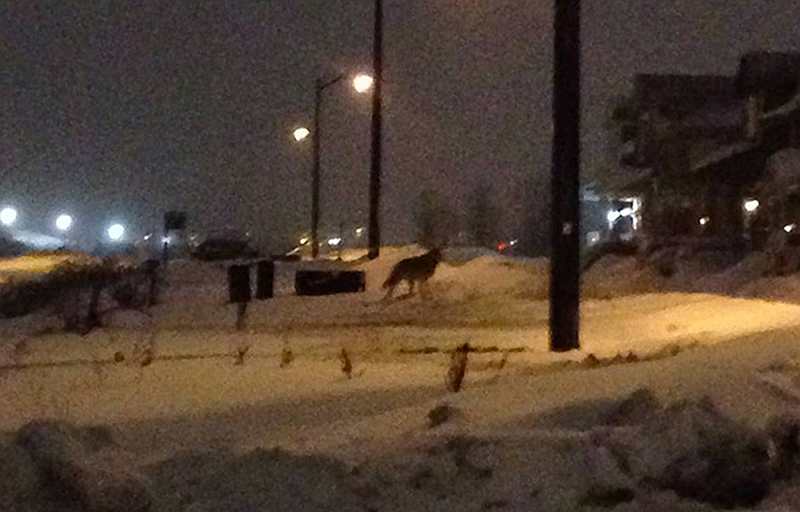
(A Coyote sighted in the Fairwinds neighbourhood, near Khamsim Street, in mid-February, 2021.)
With the increase of Coyote sightings in Stittsville, along with hearing their frightening howls, we thought it important to remind residents that while they are a “man-made problem” in the sense that their urban presence is facilitated by human activity, Coyotes are also considered an essential part of the ecosystem, even in urban settings, helping to manage rodent populations.
We must remember that Stittsville was once a rural area with much farmland and forest surrounding the town core. The increasing development in our area is constantly expanding and destroying the Coyote’s habitat. Human development often creates ideal habitats for Coyotes in urban areas – providing food sources, water, and shelter in the form of parks, ravines, storm drains and ponds. We must take a ‘they were here first’ attitude.
Sensationalism and misconceptions about the danger posed by Coyotes can lead to public panic and calls for harmful, ineffective control methods as we have read on many Stittsville facebook pages. Did you know that attempts to eradicate or severely reduce Coyote populations via hunting or trapping often backfire. Removing dominant Coyotes can disrupt their social structure, leading to higher reproduction rates among the remaining Coyotes.
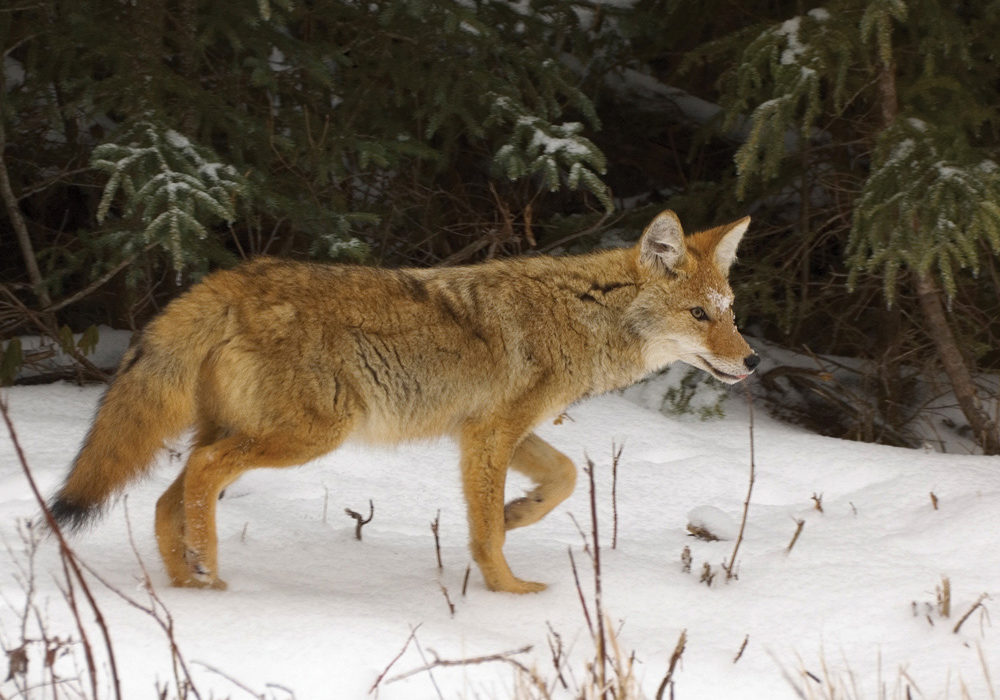
This time of year, sightings are more prevalent as the breeding season of the Coyote is from late winter to early spring. From May until July parents are protective of their young whelps or pups and may follow people or dogs at a distance to ensure they leave the area near a den (such as you would do with the Red Fox population). While this is technically defensive, it can be interpreted as aggression.
While Coyotes, by nature, are wary of humans, they are opportunistic feeders and have been known to kill small dogs that have been left unattended. What attracts a Coyote to your pet? They are attracted to dog feces, so ensure your yard is cleaned after your dog has done its business. And never leave pet or human food outside. They become less fearful of humans and this habituates them to foods provided by humans.
Also, Coyote diseases and parasites can be a risk to domestic dogs, and in some cases, their owners, such as sarcoptic mange.
Coyote sightings are commonplace in urban settings. Should you encounter a Coyote while out on a walk, keep your distance and the animal will most likely avoid you. However, if it appears to be aggressive, there are several things you should know and do:
- Never approach or touch a Coyote.
- Do not turn your back on, or run from, a Coyote.
- Back away from the Coyote while remaining calm.
- Stand tall, wave your hands and make lots of noise.
- Carry a flashlight at night to scare off Coyotes.
- If a Coyote poses an immediate threat or danger to public safety, call 911.
Understanding that Coyotes are a permanent part of our urban landscape, we must learn how to live alongside them.
To learn more visit the websites of the Ottawa-Carleton Wildlife Centre or the Ontario Ministry of Natural Resources and Forestry.