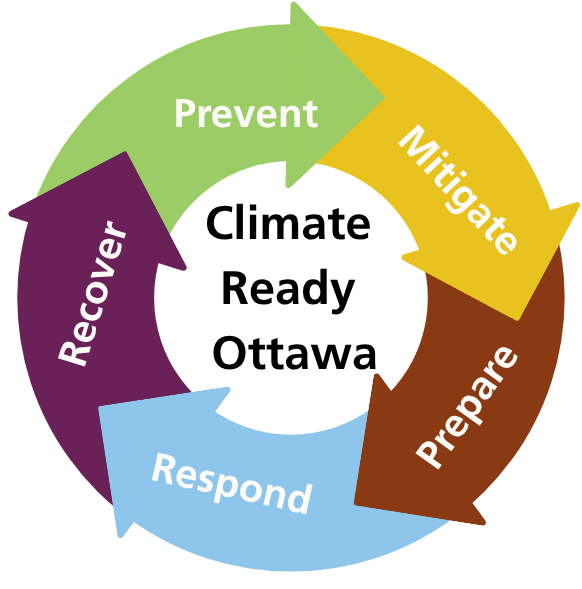








Ottawa’s climate has drastically changed since mere decades ago. Due to climate change and the impact we’ve had on the environment, severe weather events are becoming more and more frequent. Climate Ready Ottawa (CRO) is the City’s five-year action plan to prepare for climate change’s long term effects and build resilience across Ottawa. For the next five years (2026-2030), Climate Ready Ottawa will be focused on protecting people, infrastructure and essential services from intense climate risks such as flooding, severe storms and extreme heat.
This strategy surrounds the following seven priority programs that will deliver visible benefits across the City:
- Flood Preparedness: Upgrades to infrastructure, risk assessments and response plans, home retrofits, and community outreach to limit flood risks and protect vulnerable neighbours
- Cooling strategy: Support and greater outreach to heat-vulnerable residents, an increase in shaded areas, cooling features and water access in public buildings and parks to protect residents during heat waves
- Community Climate Preparedness: Focusing on those most at risk, grants and education for extreme weather preparedness and support for resilient home upgrades
- Critical Infrastructure Protection: Protection for essential services like water and wastewater treatment, transit and emergency services during power outages and extreme weather
- Climate-Ready Infrastructure: Making City infrastructure more resilient through updates to design standards, testing new technologies and utilizing nature-based solutions
- Tree and Natural Asset Management: The protection of natural systems from fire, pests, erosion and drought as well as planting and maintaining trees
- Extreme Weather Preparedness and Response: Better emergency plans, training, partnerships and equipment to respond to severe weather events
Although CRO plans to make use of pre-existing resources, they’ve identified $25 million worth of tax-supported funding needs. This funding will support high-impact programs such as cooling strategies, extreme weather preparedness and risk assessments and mitigation plans for crucial infrastructure. This funding need will be brought forwards via the annual budget process starting in 2026. Additionally $149.5 million in confirmed rate-supported investments will improve flood resilience programs and upgrade water and wastewater infrastructure to ensure that crucial services can continue to function during emergencies.
The City of Ottawa is focusing its efforts on areas where the greatest impact can be made. This includes improving infrastructure planning, emergency readiness and community support. The City is working with varying levels of government, businesses, institutions and residents to achieve City wide results. In an attempt to limit long term costs, the City is using a risk based framework to guide funding decisions. They do this by focusing resources on the most imposing risks and impacts on lives, property, and essential services.
With equity in mind, CRO prioritizes support for those who face the greatest risk and barriers to recovery. Those living in flood prone areas, people without shelter, seniors, newcomers and individuals with limited financial resources will be prioritized. These groups often have a great exposure to climate hazards but little options on preparation or responses.
Climate Ready Ottawa plans to stay accountable throughout their work via supervision and a Council sponsor group. They’ve shown their accountability with clear roles, annual tracking and public reporting. Programs and projects are divided up by departments that will receive support from the Climate Change Master Plan’s prioritization framework. CRO is governed under the City’s Climate Change Master Plan, Ottawa’s guide to reducing greenhouse gas emissions and responding to both current and future effects of climate change. This ensures that resources will end up being directed to the actions that provide the greatest protection from the greatest dangers. The City will review and refresh their plan after five years with any new risks or information in mind.
Councillor Glen Gower is hosting a panel discussion on how Ottawa is preparing for climate change, population growth and other challenges. He’s hosting this panel to share information on how our infrastructure and services need to adapt to the future and what governments and other organizations are doing to prepare. If you have any questions, attending this event will be in your best interest.
The panel will include experts from:
- Hydro Ottawa
- Mississippi Valley Conservation Authority
- EnviroCentre
- City of Ottawa’s Climate Change Unit
- City of Ottawa Emergency Management
Each organization is going to provide a presentation about their focus area which will then be followed by a short panel discussion.
Stop by on Monday, November 10, 2025 from 7:00pm to 8:30pm at the Stittsville Lions Hall, 1339 Stittsville Main Street.
Free registration: https://www.eventbrite.ca/e/are-we-ready-adapting-to-climate-change-and-growth-tickets-1828664257019