








As the weather gradually continues to warm, the night sky will continue to provide opportunities for astronomy lovers to experience exciting events. From NASA’S TRACERS mission to the Lyrids meteor shower, here are some of April’s most anticipated astronomical phenomena and rocket launches.
The full moon of April, also known as the Pink Moon, will reach its peak illumination on April 13 at 8:22PM (Eastern Time). This month, the moon is at its farthest point (or “apogee”) in its orbit around Earth, causing it to appear slightly smaller in the night sky and categorizing it as a micromoon (also called an apogee moon). This phenomenon is the opposite of supermoons, which take place when the moon is at its closest point (or “perigee”) to our planet, and tend to be referenced more often. Micromoons are generally between 12-14% smaller than supermoons and 7% smaller than typical full moons, with that size difference being quite subtle and usually not noticeable by the average observer.
NASA’s TRACERS mission will be launched on a SpaceX Falcon 9 mission on April 13. TRACERS (which is an acronym for Tandem Reconnection and Cusp Electrodynamics Reconnaissance Satellites) is a mission that plans to study the effects of space weather on Earth. Other future NASA projects, including PUNCH (the Polarimeter to Unify the Corona and Heliosphere) and EZIE (the Electrojet Zeeman Imaging Explorer), will also remain in low Earth orbit researching solar wind and its impacts on our atmosphere, and by combining the learnings of all three missions, NASA expects to gain a much better understanding of how our planet’s atmosphere allows energy from the Sun’s atmosphere to travel through.

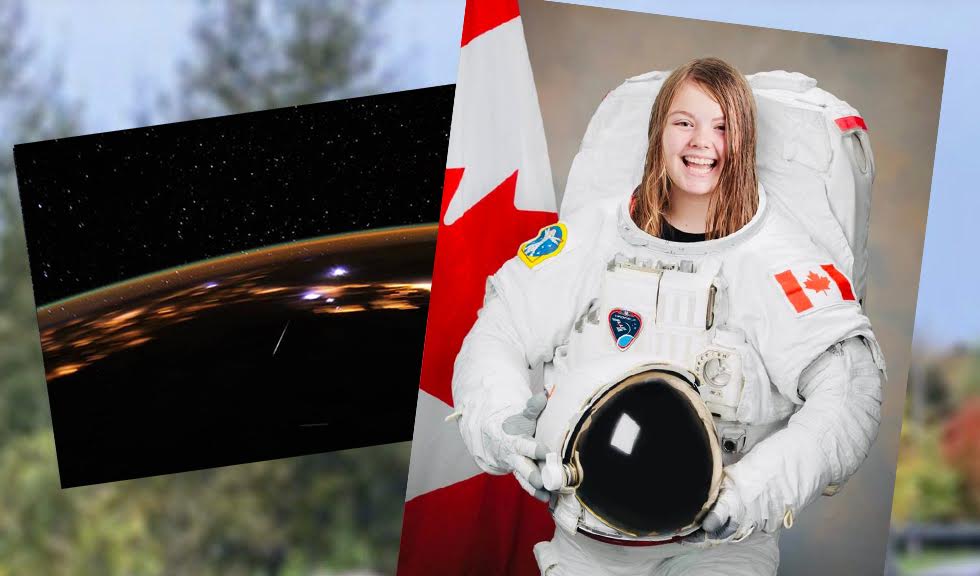
The Lyrids meteor shower, which is usually active between April 14 and April 30, is expected to peak between April 21 and April 22. It will be visible in both hemispheres and is expected to have an average rate of 18 meteors per hour. However, in the past, the Lyrids shower has been known to shock observers with sudden bursts of one hundred meteors per hour. Some of these bursts have been seen in Greece (1922), Japan (1945), and the United States (1982). The Lyrids are one of the oldest known meteor showers in history, with the first known sighting recorded over 2,500 years ago, according to multiple historical Chinese texts. The shower was created through the debris of comet Thatcher, which completes an orbit around our planet every 415 years and will not be visible again until the year 2276.

A super new moon will take place on April 27. As described above, the term “supermoon” refers to any full moon or new moon that occurs when the moon is at its closest point in its orbit to Earth. The term is most commonly used when referring to full supermoons, but super new moons are still recognized even though they are not visible from Earth.
Whether you choose to observe the Pink Moon on April 12 or would rather stay up late to spot a Lyrids meteor, this is sure to be a very active month for astronomy fans worldwide. Good luck, and happy observing!