








A new year is here! As 2026 begins, January will be sure to bring astronomy lovers a more-than-adequate amount of viewing and learning opportunities. From the Earth at its perihelion point to the highly regarded Quadrantids meteor shower, here are some of January’s most anticipated astronomical events.
On January 3, the Earth will be at its closest point to the Sun in its orbit, also known as its “perihelion.” At noon on that day, there will be approximately 147,099,894 kilometres between the two celestial bodies, which is about five million fewer kilometres than their distance at “aphelion” (or their point with the greatest separation). Perihelion occurs annually about two weeks after the winter solstice, while aphelion always lands near July 4, which is two weeks after the summer solstice. These timelines are fairly fixed from year to year, though due to eccentricities in the planet’s orbit, the exact perihelion and aphelion days can experience variations up to two days apart from one year to the next. With the dates being known to move forward a single day for every 58 years that pass, astronomers predict that, in over four thousand years, Earth will not reach its perihelion point until mid-March.
Also on January 3, the first full moon of the year will be visible, which also happens to be a Supermoon. Commonly referred to as the Wolf Moon for the wolves that become noisy and active during this time of year, the January full moon has also been called the Old Moon, the Moon After Yule, the Hard Moon, and the Center Moon. Supermoons occur when the Moon is within a specific, close distance in its orbit around Earth, making it appear both larger and brighter than usual. However, these changes are sometimes too slight to be noticed by the average observer without the use of a telescope, meaning that Supermoons are mostly exciting in rarity alone. This will be the first of 2026’s three Supermoons, with the other two taking place in November and December.
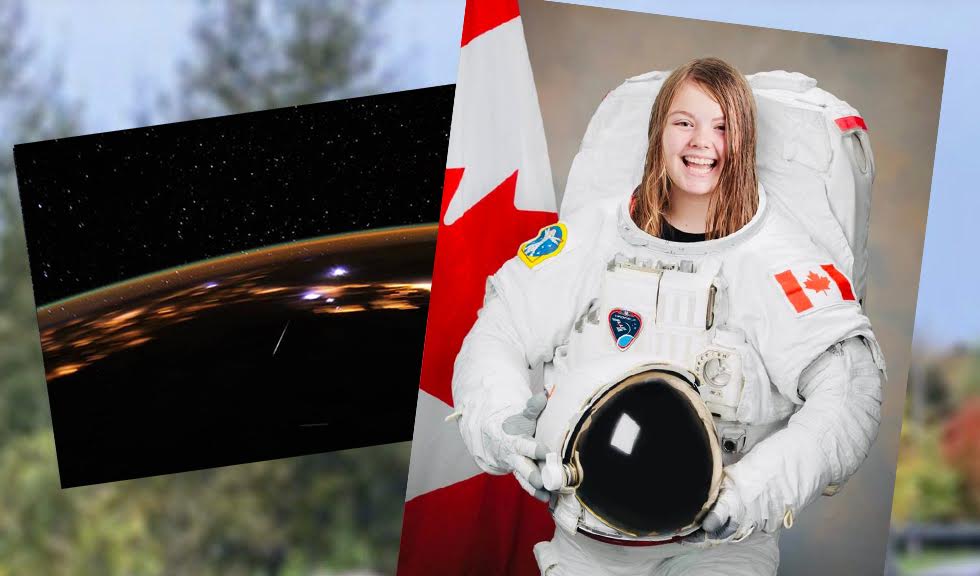
The Quadrantids meteor shower will be reaching its peak intensity during the night of January 3 and the morning of January 4. The Quadrantids shower will only be active between January 1 to January 5, meaning that it has a shorter period of activity than many of the other annual showers that can continue for weeks on end. However, this shorter length has no impact on its power— the Quadrantids meteor shower is consistently one of the strongest showers of the year, with an average rate of 40 meteors each hour. This particular shower was likely produced by leftover dust grains from comet 2003 EH1, which was first observed in March 2003 and is now expected to have lost most of its ice components, making it an “extinct comet.” Though its strength matches those of August’s Perseids and December’s Geminids showers, the Quadrantids shower is observed far less often due to its narrower time frame. This year, the Quadrantids shower will be particularly difficult to observe, with the recent full Supermoon casting extra amounts of light and causing all but the brightest meteors to be obscured.

Overall, this month is sure to contain a variety of fascinating astronomical events. Whether you choose to try your luck at spotting one of the many Quadrantid meteors despite the moonlight interference or would rather dive deeper into the history of the January Wolf Supermoon, the first month of 2026 will certainly have astronomy opportunities for everyone. Good luck, and happy observing!