








As the summer months slowly come to a close, September is shaping up to be an especially exciting month in the world of astronomy. From the first day of autumn to the Corn Moon, here are some of September’s most anticipated astronomical phenomena.
The full moon of September, commonly referred to as the Corn Moon, will reach its peak illumination at 2:09 PM (Eastern Time) on September 7. Named for the corn that is typically harvested around this time of year, this moon is sometimes also called the Green Corn Moon or the Full Corn Moon. However, the full moon naming system for this particular month differs slightly from others. The title of the “Harvest Moon” is annually given to the full moon of either September or October, depending on which falls closer to the date of the September Equinox. This year, the September full moon will rise 15 days before the equinox, with the October full moon rising 14 days later, making October the month of this year’s Harvest Moon and causing September’s moon to revert back to the title of Corn Moon. October Harvest Moons are significantly less common, with the last one occurring back in 2020.
Between September 7 and September 8, a total lunar eclipse will take place, reaching its maximum point at 2:11 PM. During this event, the Earth will pass between the Sun and the Moon, with the planet’s shadow casting itself on the lunar surface and causing it to appear a shade of dark red. This specific colour has caused lunar eclipses to often be referred to as “blood moons.” This lunar eclipse will not require any special equipment, including binoculars or telescopes, to view, and will have a duration of over five hours, making it a uniquely simple astronomical event to observe as well as the longest total lunar eclipse since 2022. However, this particular eclipse will not be visible in North America, even in its weaker stages. Instead, totality will be fully seen in Europe, Asia, Africa, and Australia.
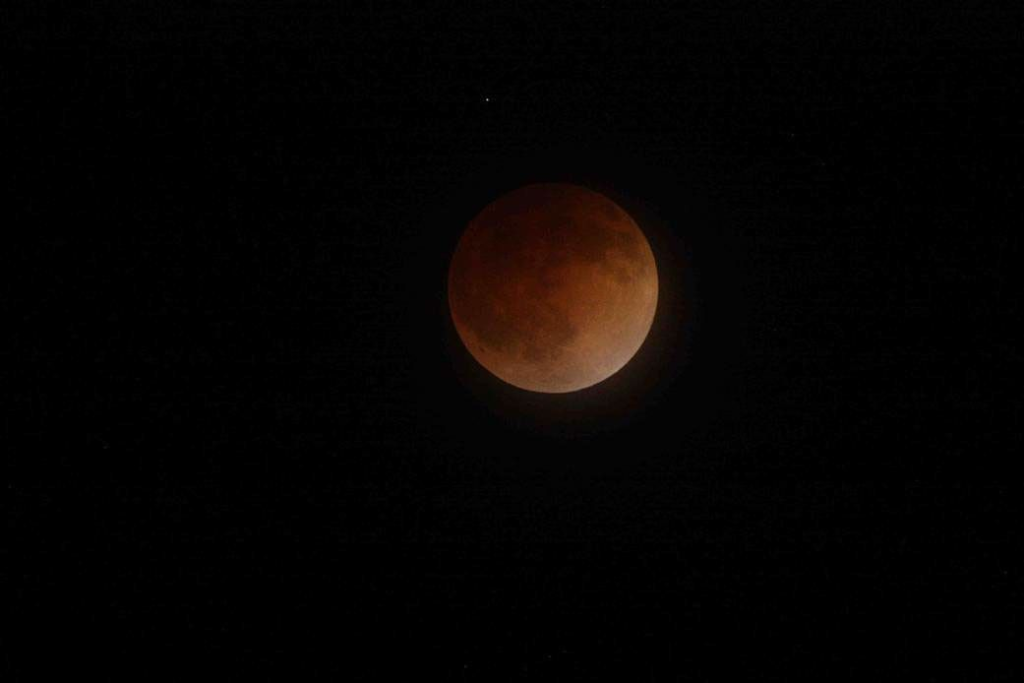
(A total lunar eclipse as seen on April 15, 2014. Image Credits: NASA)
A second eclipse will also land in the latter half of the month. This time, it will be a partial solar eclipse, peaking on September 21 between 3:41 PM and 3:43 PM. At its maximum point, about 80% of the Sun will be darkened, making it appear as if a slice has been taken out of it. Like the previous eclipse, this one will not be visible in North America— it will be fairly isolated, having an estimated number of only around 16 million potential viewers, with the view of greatest coverage falling between New Zealand and Australia. Partial solar eclipses occur when the Moon moves in between the Sun and the Earth and casts its shadow, blocking out part of our view of the Sun. During eclipse seasons, one eclipse will always be followed by another about two weeks later, which explains the quick succession in which these lunar and solar events will occur. The September 21 equinoxes are the rarest of them all, with the last occurring several millennia ago and the next in 2092.
Finally, the September equinox will be taking place on September 22. This day marks the beginning of autumn in the Northern Hemisphere (or the “autumnal equinox”) and the beginning of spring in the Southern Hemisphere (or the “vernal equinox”), and is celebrated across the world in different ways, varying from festivals to feasts and family celebrations. In most years, the equinox falls on September 22 or September 23.
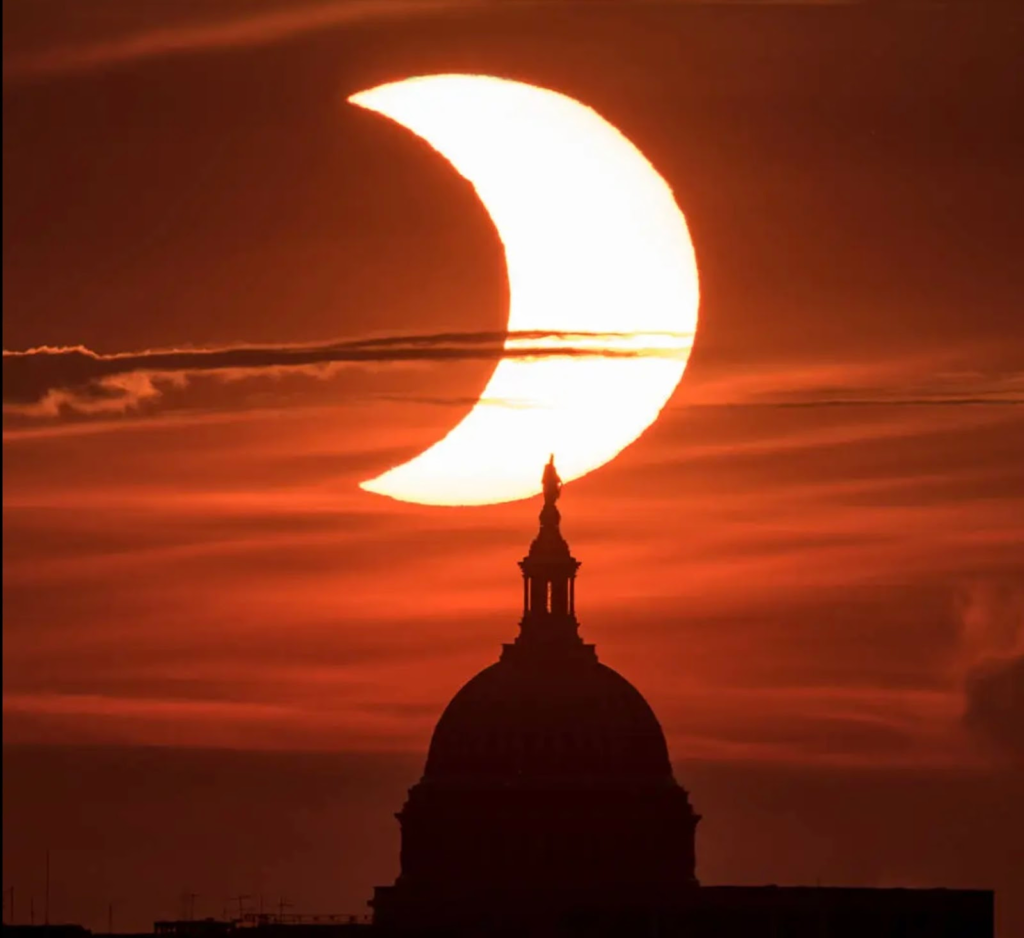
(A partial solar eclipse as photographed on June 10, 2021. Image Credits: NASA/Bill Ingalls)
Overall, September promises to provide fans of the night sky with multiple exciting, easily visible events. Whether you choose to observe either of the eclipses or would rather celebrate the equinox, September is sure to be a great month for astronomy lovers worldwide.