









The Carleton County Fire of August 17, 1870, devastated much of what was then Carleton County, including the village of Stittsville and threatening Ottawa for a time. The fire broke out following a three and a half month dry spell which left the countryside tinder dry and susceptible to a rampaging, out-of-control fire. The tinder dry landscape combined with a collection of farms built largely of fire-friendly white cedar plus a howling wind, caused widespread destruction.
The fire brought not only destruction but also death in its wake, partly because of its wide swath but also because of its rapid, lightening-like advance. Among the deaths were those of Mrs. Patrick Hartin, an early settler from Ireland who settled in the Stittsville area, and who, on August 17, 1870, died clutching a prized old world clock on the bank of Poole Creek; and Robert Grant, one of the most prosperous farmers in the area, was engulfed by flames in his stone home as he tried to rescue important papers he had for the Masonic Lodge in Hazeldean. Mrs. Grant and her children escaped, but not without hazard as her dress caught fire as she rushed from the burning building with her children trying to reach the safety of nearby Poole Creek.
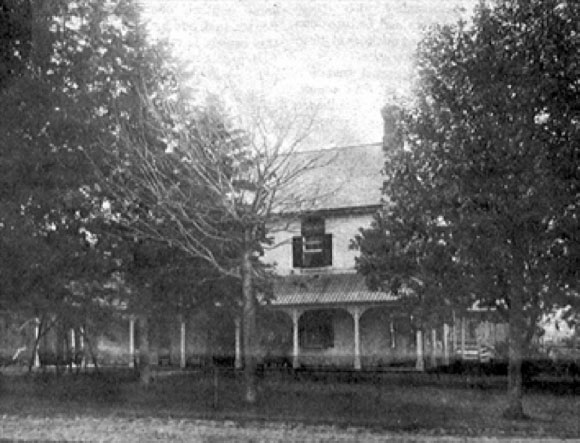

From Stittsville northwest through Huntley Township, as well as in March Township and the north part of Nepean Township, a swath of country four miles wide was utter destruction with nine houses out of every ten having been destroyed.
One wonders why these people did not flee from the fire and why they were still on their properties as the fire advanced – the answer is to be found in the behaviour of the fire. It began when workers cutting brush for the new Central Canada Railway line near Blakeney between Almonte and Pakenham set about to burn the brush. But the fire got away, spreading into the adjacent bush area. Efforts to contain the fire proved fruitless as the wind began to rise, spreading the fire. The wind-assisted fire first spread north, missing Pakenham but reaching the outskirts of Arnprior and then Fitzroy Harbour, all in the morning hours, spreading at a speed difficult for people to avoid with the wind blowing harder and harder.
By the afternoon, the wind carrying the fire was blowing around 100 miles an hour. Then the wind shifted and began blowing eastward with the fire front increasing from the seven mile front near Fitzroy Harbour to an 11 mile wide front when the fire reached the Goulbourn/Stittsville/Bells Corners area. There were reports of winds of terrific force which swept the fire along “in billows of flame until the whole west appeared like a sea of fire rolling down”.
The village of Stittsville was in the path of the fire. It sat at the crossroads centered around Jackson Stitt’s corner – Huntley Road (now Carp Road) and the 12th concession road leading to Ottawa, (now Neil Avenue, which at that time ran directly to what is now Hazeldean Road). At that time, the village had a hotel, a general merchant, a fairground, some stables, a post office, a blacksmith, a tanner, two shoemakers, a weaver, and a log schoolhouse. About 100 people lived there. Two churches, a Wesleyan Methodist and an Anglican church, were located a couple of miles to the south in the countryside.
The fire roared through and destroyed every building in the village except the two churches to the south. No villagers were killed, probably because they were able to warn each other and fled in a frenzy just ahead of the fire, many to Westboro and the Ottawa River. But those living on farms may not have realized the danger until it was too late. In Nepean and March, only three houses over a distance of 15 miles survived. Flames also incinerated the newly-constructed buildings of the Ottawa Agricultural Society at Lansdowne Park, then outside the city limits.
South of Stittsville, on the tenth line, the Methodist Chapel (the future Stittsville United Church) had survived the fire, thanks to mud placed on its wooden sills by frantic parishioners’ hands. In between the Chapel and Stittsvillle were the railway tracks. By this time, less than one month before the ceremonial first train passed through Stittsville on September 15, 1870, the station and water tower had been built. Yet they were untouched by the fire.
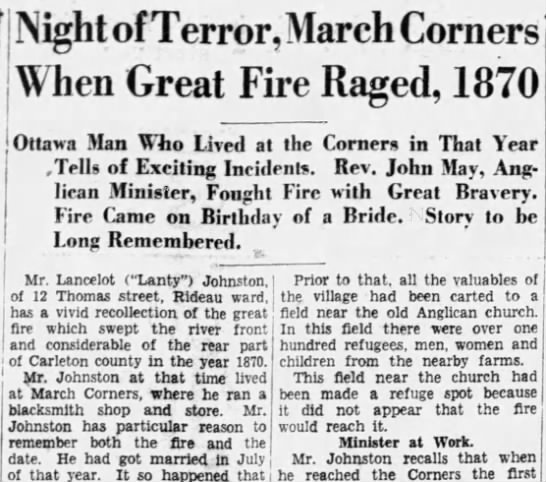
In the days following August 17, daily quantities of clothing, provisions and lumber were sent to Goulbourn, Huntley and March townships, the three devastated areas as well as the Bells Corners area.
In early September, the Toronto Daily Telegraph reported that, “Few at this distance have an adequate idea of the magnitude of the disaster that has fallen upon the people in the burnt district adjacent to Ottawa. So sweeping a fire was never before known, in a purely farming country such as that which has devastated in this instance. For miles there is not a house standing, not a fence, and not a tree except bare trunks, denuded of all their branches.”
The new Dominion of Canada government (Confederation had only taken place three years before), sent financial assistance to the victims of the fire and so did Carleton County Council giving victims $5,000.
The villagers of Stittsville picked themselves up and began to rebuild their lives. But many decided that a better place for the village might be near the new railway line that had just been built through Goulbourn and it was a kilometre and a half south of the old village site. Times were changing they reasoned, and the new railway line would bring a whole lot of business to Stittsville. They were proved right as the railway became central to Stittsville’s prosperity in the early years of the 20th century.
A few people preferred to rebuild at the original site of the village around Carp Road and Neil Avenue and so that area gradually became known as “Old Stittsville”. But for a hundred and twenty years or so after the Great Fire, the commercial hub of Stittsville was centred around the railway, right here in Village Square. The TransCanada Trail which we now use for our recreation, is the former railbed of the rail line that ran right through the centre of Stittsville.
With the fire approaching the city, the St. Louis dam on the Rideau Canal system was ordered by the Ottawa Fire Department to be breached. The dam was located to nearby Dow’s Lake. At nearly 300 yards wide a deluge of water gushed down Preston Street to the Ottawa River. With the winds dying down, this surge of water formed a barrier, the fire’s expanding flames were cut short ultimately saving Ottawa from devastation.
The Great Fire of 1870 smouldered for several weeks – when the fall rains came it was finally extinguished, however, it did continue to burn in areas for up to a year. From the Rideau Lakes to Wakefield, the fire took its toll on several hundred square miles. Twenty people were left dead and the homeless numbered in the thousands.

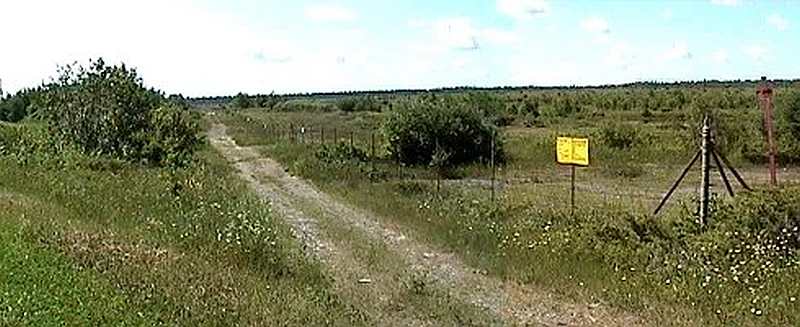
To this day you can still see evidence of the fire with no trees growing in the area we now call the “Burnt Lands” along Highway 7 heading to Carleton Place and through to Almonte.
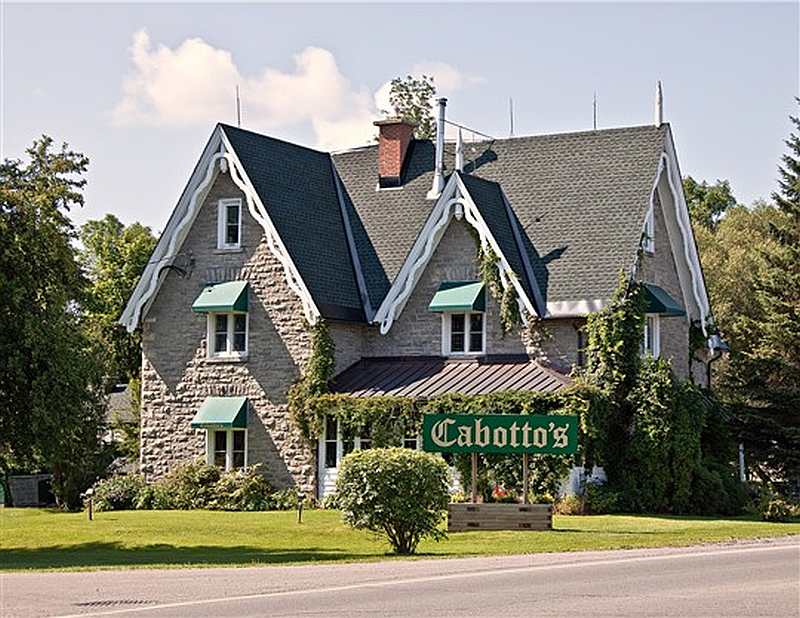
There were only a handful of stone buildings owned by wealthier farmers that survived – one of which can be found on Hazeldean Road (Cabotto’s Restaurant and formerly Kemp’s Tavern). Susanna Kemp, born in 1807, was an immigrant from Tipperary, Ireland. She and her husband, William, were early farming pioneers in the village of Stittsville. Upon William’s death when she was 34 years old and with seven children, Susanna established a thriving business serving travellers as an innkeeper and operating a tavern. After the Great Fire of 1870, a new railway line was built south of her homestead. There was a change in travel patterns which affected the flow of guests to the inn and tavern. The business was no longer viable. Susanna stayed in the homestead and continued on the farm until her death in 1890. The house stands along Hazeldean Road as one of the finest architectural beauties in the village of Stittsville.
On September 29, 2012, the Goulbourn Township Historical Society installed a plaque at Stittsville Village Square commemorating this historic fire that devastated ‘old’ Stittsville.

A roadway in Stittsville will commenerate my second great grandfather Robert Grant. He got his younger wife and 6 small children to safety but returned to the house for valuables.He was not found. The house was burnt to only a stone shell but rebuilt for his son John Grant in about 1885. I would say the photo was taken around 1929. The trauma stayed with the whole community for the last 155 years. Ruth Grant.
Thanks for your commentary on this important topic. The fire was caused by the popular attitude of the time that burning was an acceptable way to clear land, in this case for railways. Such attitudes would continue to endure for at least the next 20 years.