








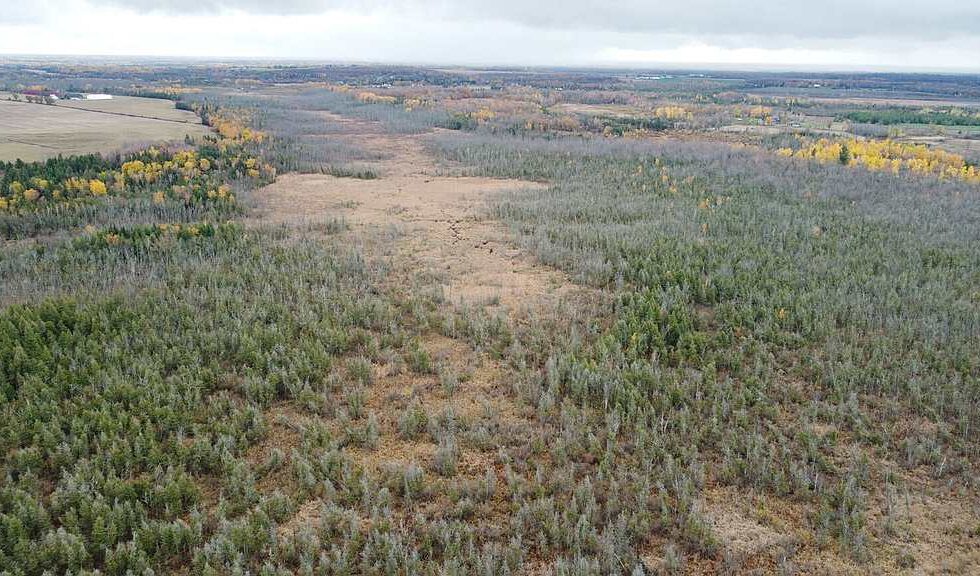
(On March 17, 2026 the Rideau Valley Conservation Foundation announced the acquisition of an Ottawa area wetland donation of 250 acres. Photo: Rideau Valley Conservation Foundation (RVCF)
On March 17, 2026, the Rideau Valley Conservation Foundation (RVCF) made a major announcement – the acquisition of a 250-acre parcel of conservation land, that includes 210 acres of wetland, from landowners. This is a huge step in the protection of the vital ecologically sensitive wetlands across the Rideau Valley watershed, in addition to advancing their local conservation goals.
“This property adds to an expanding network of wetlands, shorelines, forests and meadows,” stated RVCF Executive Director Diane Downey. “Together, these lands create connected habitats where nature can thrive for today and generations to come.”
The acquisition was made possible through financial support from the City of Ottawa, Ducks Unlimited Canada (DUC) and Scout Clean Energy, the collaboration and generosity of participating landowners, and with ongoing program support from partners such as Modern Niagara and Friends of Stittsville Wetlands.
Janet Stavinga, President of Friends of Stittsville Wetlands (FoSW), shared with Stittsville Central, “We received a tip in the summer of 2024 that we provided to our partners, Rideau Valley Conservation Foundation and Ducks Unlimited Canada, and they ran with it. We applaud their outstanding efforts to bring on board other partners to secure and protect these wetlands.”
“This acquisition will strengthen habitat connectivity and secure a natural area that provides vital benefits to wildlife and communities,” said Marie-Paule Godin, DUC’s Manager of Provincial Operations for Ontario. “Thank you to RVCF and the partners for your leadership in conserving this important ecological asset within the Rideau Valley Watershed.”
Ken Little, Scout Clean Energy VP of Development said, “Conserving wetlands, planting more trees, increasing animal habitat – these are the types of results we hope to achieve on a large scale through the energy transition, but also with local impact and contributions that make a difference in communities. Special thanks to the City of Ottawa and Ducks Unlimited for coming together in support of the great work done by the RVCF.”
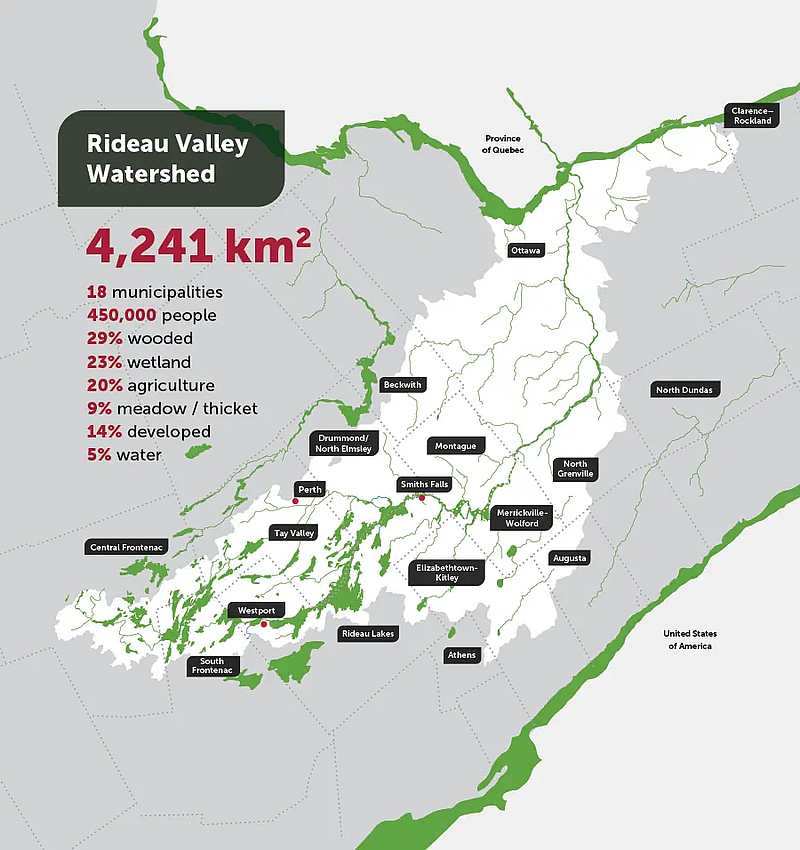
With this addition, RVCF now owns 2,986 acres of conservation lands across the watershed and supports the protection of another 5,570 acres in partnership with the Rideau Valley Conservation Authority. These lands protect critical habitat, support biodiversity and preserve natural spaces that benefit water quality, reduce flood risk, enhance climate resilience and promote community well-being. Due to the vulnerability of ecosystems to environmental changes and human disturbances of the newly acquisitioned lands, they will be off-bounds for the public.
“Protecting wetlands like this delivers lasting benefits for our environment and our community,” said Mark Sutcliffe, Mayor of Ottawa. “These natural spaces help manage floods, improve our water quality, and support our wildlife. I want to thank everyone whose collaboration made this possible. This will have a positive impact for generations to come.”
Most of these lands have been generously donated by private landowners who wished to contribute to a more sustainable future while preserving the natural character of their property.
In a press release, the RVCF shared, “RVCF encourages landowners to consider conservation land donations as a lasting way to protect special places.”
For those unable to donate land, the Steve Simmering Conservation Lands Endowment Fund helps cover annual maintenance, insurance and other long-term stewardship costs. To learn more about conservation land donations or RVCF’s work across the watershed, visit www.rvcf.ca.
Sounds great, but where are these lands?
From various private landowners. Due to the vulnerability of ecosystems to environmental changes and human disturbances of the newly acquisitioned lands, they will be off-bounds for the public.
THANKS AND CONGRATULATIONS TO ALL INVOLVED = C. BOARD