









Spring has officially arrived! As we continue to make our way through the warmer months, April is guaranteed to bring astronomy lovers plenty of observation and learning experiences. From the rescheduled launch of Artemis II to the oldest meteor shower ever observed, here are some of April’s most anticipated astronomical events.
The Artemis II lunar spaceflight mission was originally given a launch window of anywhere between February 6th and February 15th. However, following a “wet dress rehearsal” (the final test of a fully fuelled rocket, where every step of the pre-launch process is carried out until the moment before the actual launch would occur) on February 2nd that resulted in a liquid hydrogen leak, and a helium flow issue that was discovered on February 19th, all February launch attempts were cancelled and the Space Launch System (SLS) rocket was returned to its launch pad for significant repairs. Now, NASA has selected April 1st as its new target launch date. The two-hour possible launch window will open at 6:24PM (Eastern Time), with other two-hour windows available each following day until April 6th. If the launch is not successful before that April 6th date, the next opportunity will be on April 30th.

The full moon of April, more commonly known as the Pink Moon, will also reach its peak illumination on the night of April 1st! Named for the North American “moss pink” wildflowers that begin to bloom in the early spring months, April’s full moon has special relevance when it comes to determining the date of Easter. Easter Sunday is always observed on the first Sunday after the “Paschal full moon,” which is the full moon occurring directly after the fixed spring equinox date of March 21st. For example, this year, the full moon of March fell on March 3rd. As this was far before the date of the equinox, the Pink Moon is this year’s Paschal full moon, meaning that Easter will land on the Sunday following the night of April 1st (or April 5th). This scheduling method allows for a large range of possible Easter dates – in 1818, the Paschal full moon fell on the exact equinox date of March 21st, meaning that the following Sunday was the very next day, or March 22nd. This is the earliest possible day that Easter can occur, and will not be seen again until 2285.
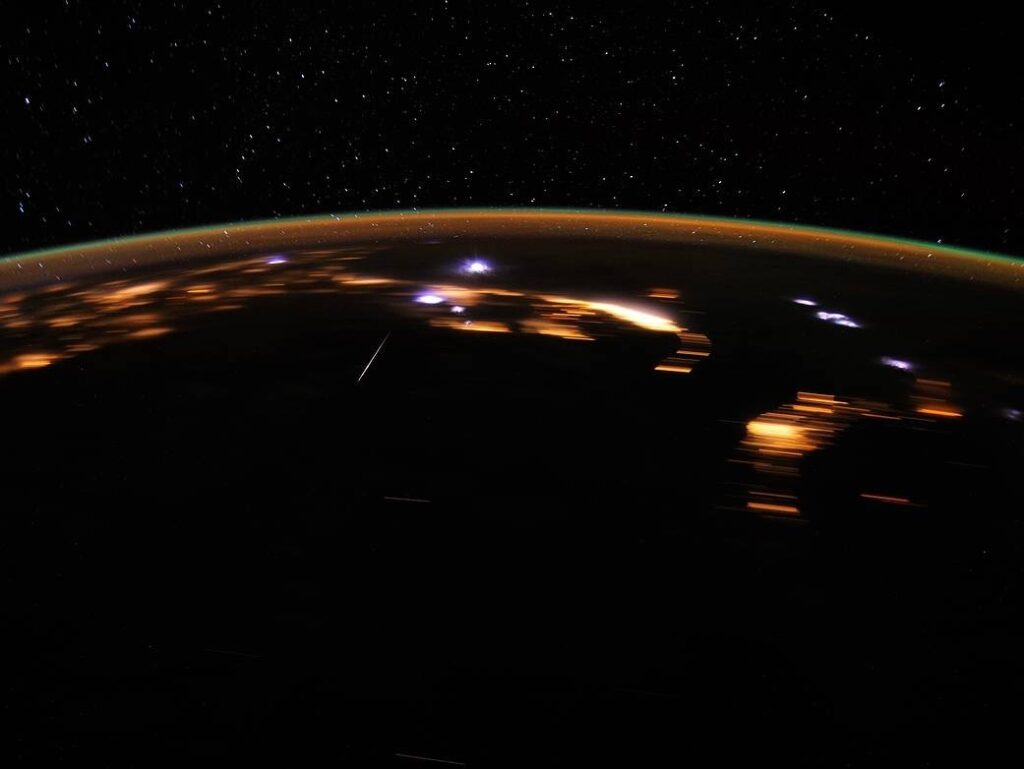
This year, the Lyrids meteor shower will be at its most active throughout the night between April 22nd and April 23rd. Typically observed annually between April 16th and April 25th, the Lyrids shower is the oldest recorded meteor shower in history. The shower was first seen and documented in records dating back to 687 BCE, with Chinese astronomers stating that the “stars fell like rain.” During their peak under dark skies, this shower typically produces between 10 and 20 meteors per hour, with Lyrid meteors known for being especially fast and bright. Though Lyrid meteors do not always leave behind the same glowing streaks as many of the other annual showers, they occasionally manifest as bright fireballs, and are also known for their unexpected plentiful showers. These “surprise” showers have caused observers to see over 100 Lyrid meteors hourly, with the most well-known occurrences taking place in Virginia in 1803, Greece in 1922, Japan in 1945, and the United States in 1982.
As usual, all of these events are sure to provide astronomy lovers with opportunities to observe the magic of the night sky firsthand. Whether you choose to observe the Paschal full moon or would rather learn more about the Artemis II astronauts participating in the lunar flyby, the fourth month of 2026 will certainly have something for everyone. Good luck, and happy observing!