









As the temperatures slowly begin to warm up again, the astronomy events of March promise to be just as exciting as usual. From the first day of spring to the Blood Worm Moon total lunar eclipse, here are some of March’s most anticipated astronomical phenomena.
The full moon of the month, more commonly known as the Worm Moon, will be rising at 6:38 AM (Eastern Time) on March 3. Named for the earthworms that begin to appear as the winter ground thaws, the Worm Moon is alternatively referred to as the Goose Moon, the Crow Comes Back Moon, and the Wind Strong Moon. This will not only be the final full moon of winter, but will also be accompanied by an especially noteworthy total lunar eclipse.
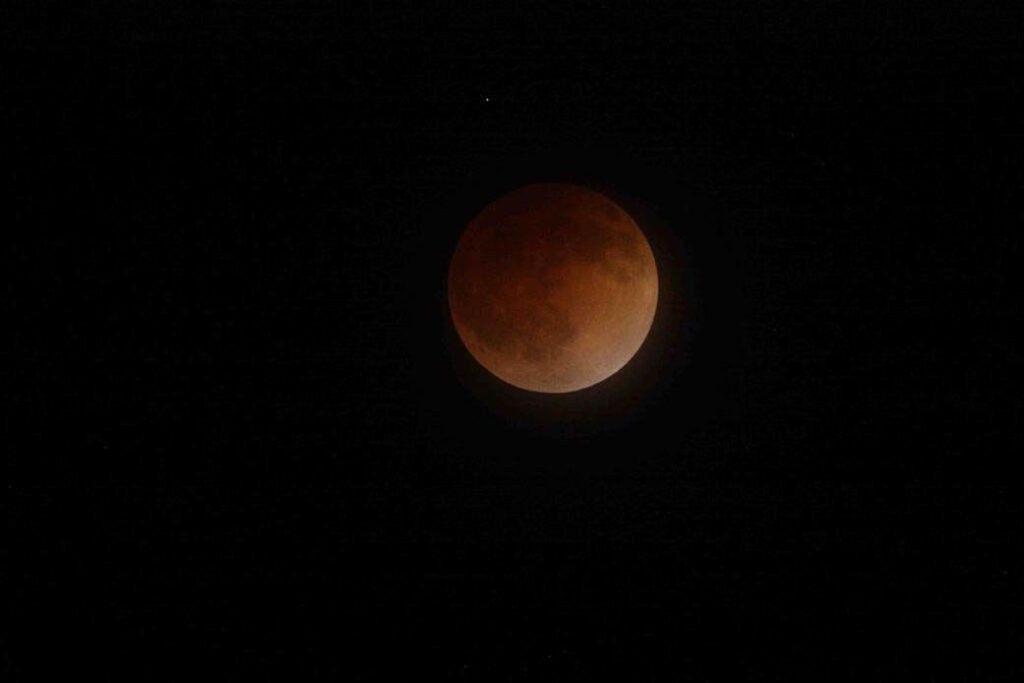
This month’s total lunar eclipse will reach its maximum point at 6:33 AM, only a few minutes before the arrival of the Worm Moon. Total lunar eclipses occur when the Earth passes between the Sun and the Moon, obscuring the lunar surface with its shadow. For this particular eclipse, “totality,” or the period when Earth’s shadow is fully cast, will last for just under an hour (between 6:04 AM to 7:02 AM), giving hopeful observers plenty of time to observe the peak of the event. During totality, the full moon will take on a deep red or orange colour, which is what gives total lunar eclipses their nickname of “Blood Moons”, though pale turquoise rims can sometimes also be seen on the Moon’s outer edges during eclipses. This Blood Worm Moon will be visible across North America, Australia, and eastern regions of Asia. Though lunar eclipses are not particularly rare and typically take place about twice a year, total lunar eclipses that create the “Blood Moon” effect are more uncommon, with the next not occurring until the New Year’s Day eclipse of January 1, 2029. Unlike solar eclipses, lunar eclipses are entirely safe to view and do not require any special equipment, making it an easily accessible (and unforgettable) astronomical opportunity for all.
Finally, the spring equinox (also called the vernal equinox) will arrive at last on March 20! At 10:46 AM, spring will arrive in the Northern Hemisphere, with the Southern Hemisphere making its transition into autumn. The term “equinox” comes from the fact that, on this day, day and night will be approximately equal (each twelve hours long). Because the actual length of the solar year is not exactly 365 days, the spring equinox can land on slightly different dates every year, with March 20 being the most common of the possibilities. March 19 equinoxes, on the other hand, are more frequently seen during leap years; while there will have been 94 years between the previous and next that lands on March 21. The vernal equinox is celebrated differently across the world, though some popular traditions include feasting, bonfire celebrations, and undergoing deep “spring cleanings” to properly embrace the new season. The day of the equinox technically only marks the “astronomical” first day of spring, while the meteorological start of the month is March 1, which makes it easier for those analyzing weather patterns for statistical purposes to split the year up into four even periods of three months (the first days of March to May, June to August, September to November, and December to February).
As always, each of these events is guaranteed to provide astronomy enthusiasts with opportunities to observe the magic of the night sky firsthand. Whether you choose to photograph the dark red tint of the Blood Worm Moon or would rather host a bonfire celebration for the vernal equinox, the third month of 2026 will certainly have something for everyone. Good luck, and happy observing!